A tree, but really two trees
Almost every commercial citrus tree is two genetically distinct plants fused into one — and understanding this is the foundation of every recovery decision you'll make.
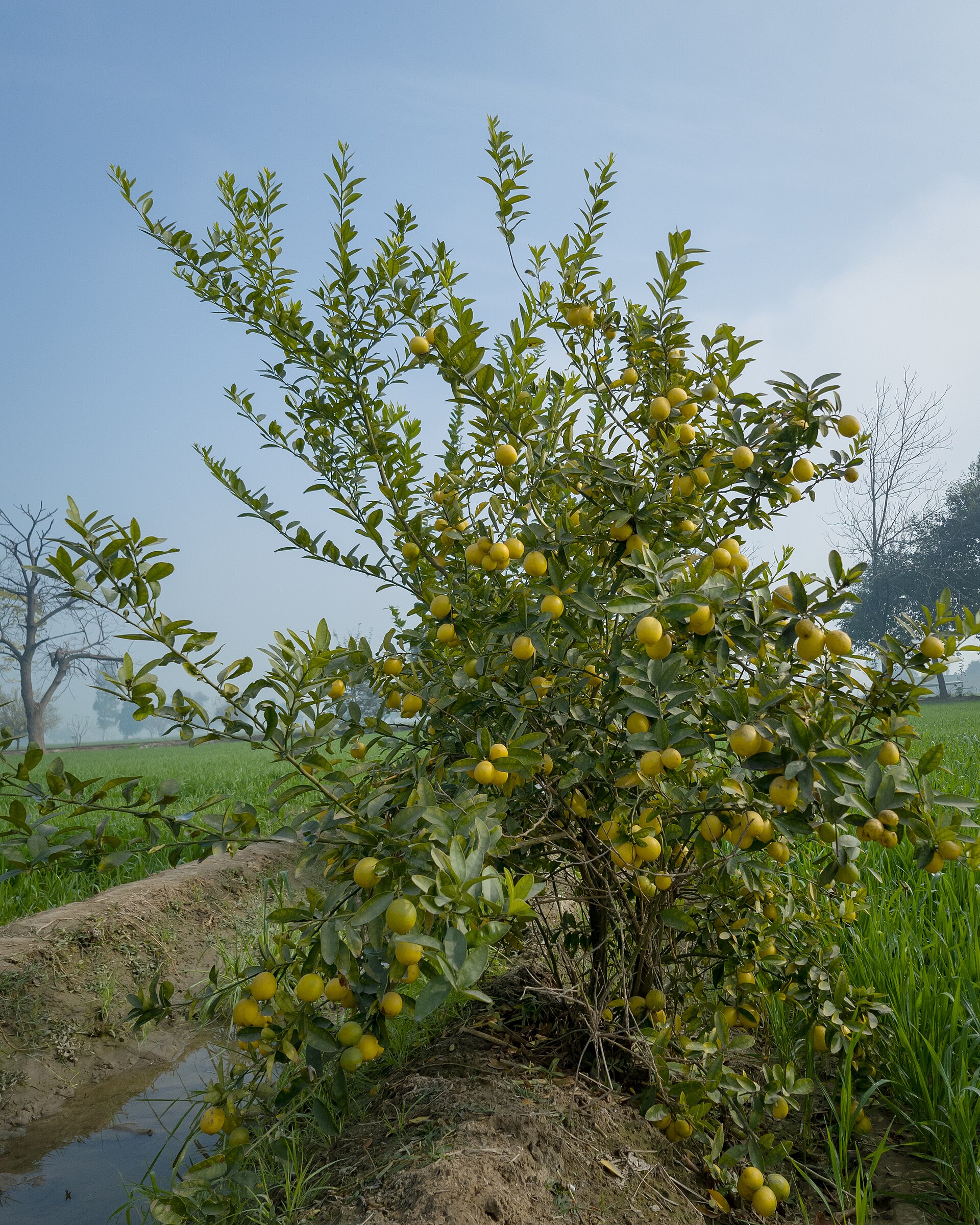
Plate I · A mature lemon tree, the canopy in full production
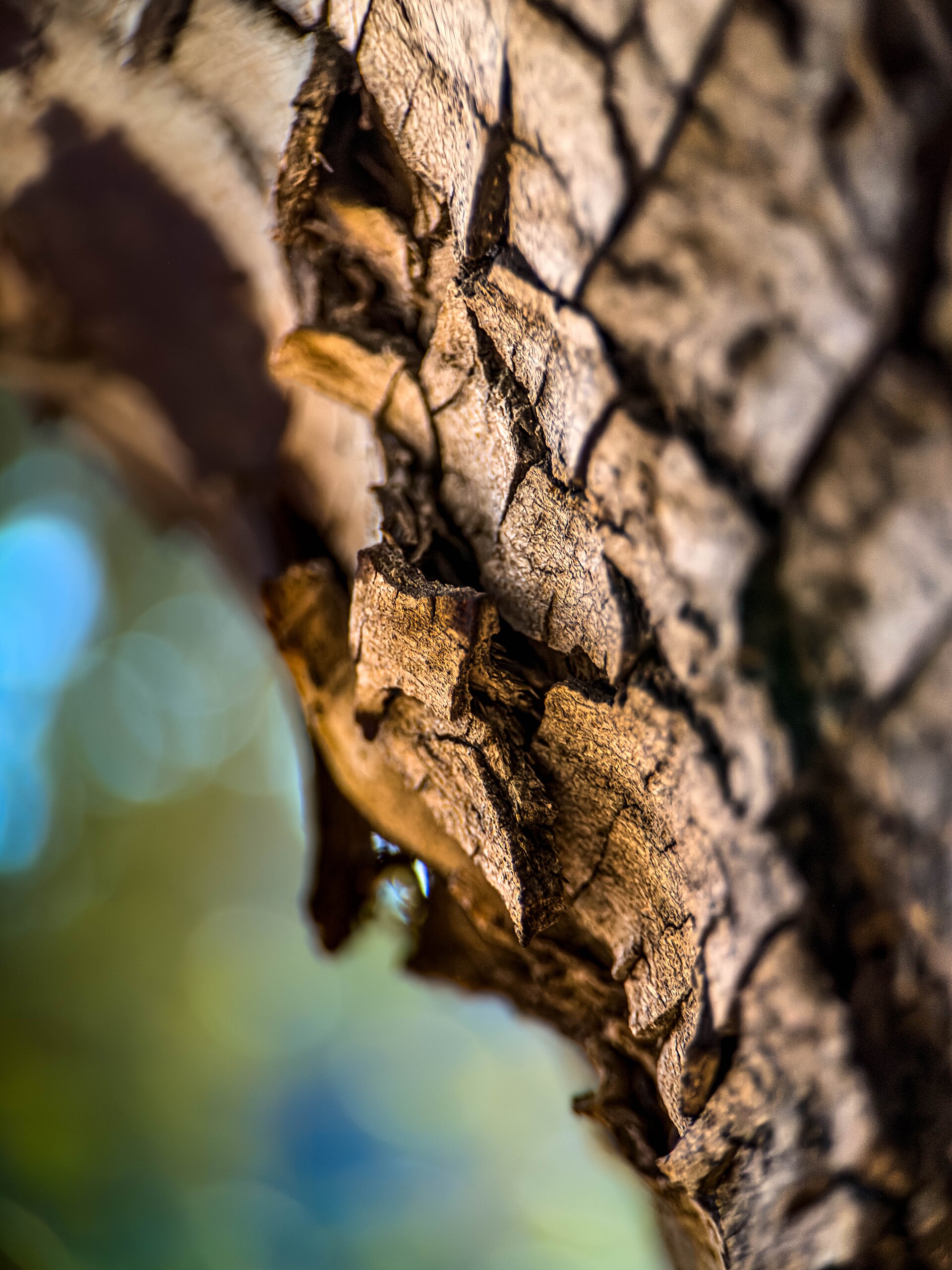
When you look at your old growth lemon, you're seeing the result of an ancient horticultural marriage. The roots and lower trunk — the rootstock — were chosen for vigor, disease resistance, and adaptability to your soil. The branches and leaves above — the scion — are the actual lemon variety, grafted on as a young bud because it produces the fruit you want. Where they meet is called the bud union, a permanent scar visible on the trunk just above the soil line.
This matters enormously for your recovery. The fact that your scratch test shows green cambium under the bark on the affected side means the scion's vascular system is alive. The rootstock is pumping water and nutrients upward — the engine is running, even if the windows are dark. Your job now is to coax the dormant buds awake and rebuild the canopy without losing the variety to vigorous rootstock takeover.
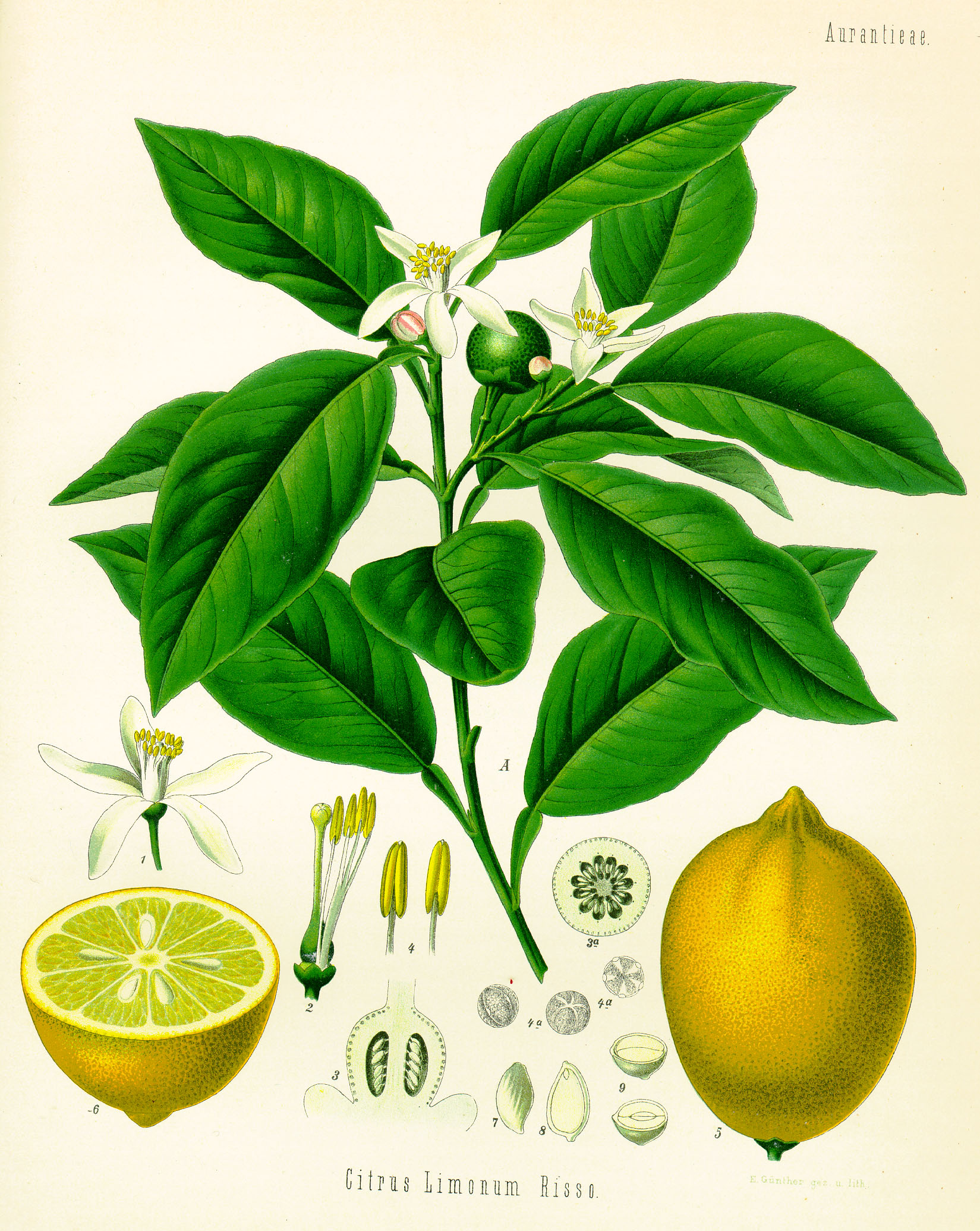
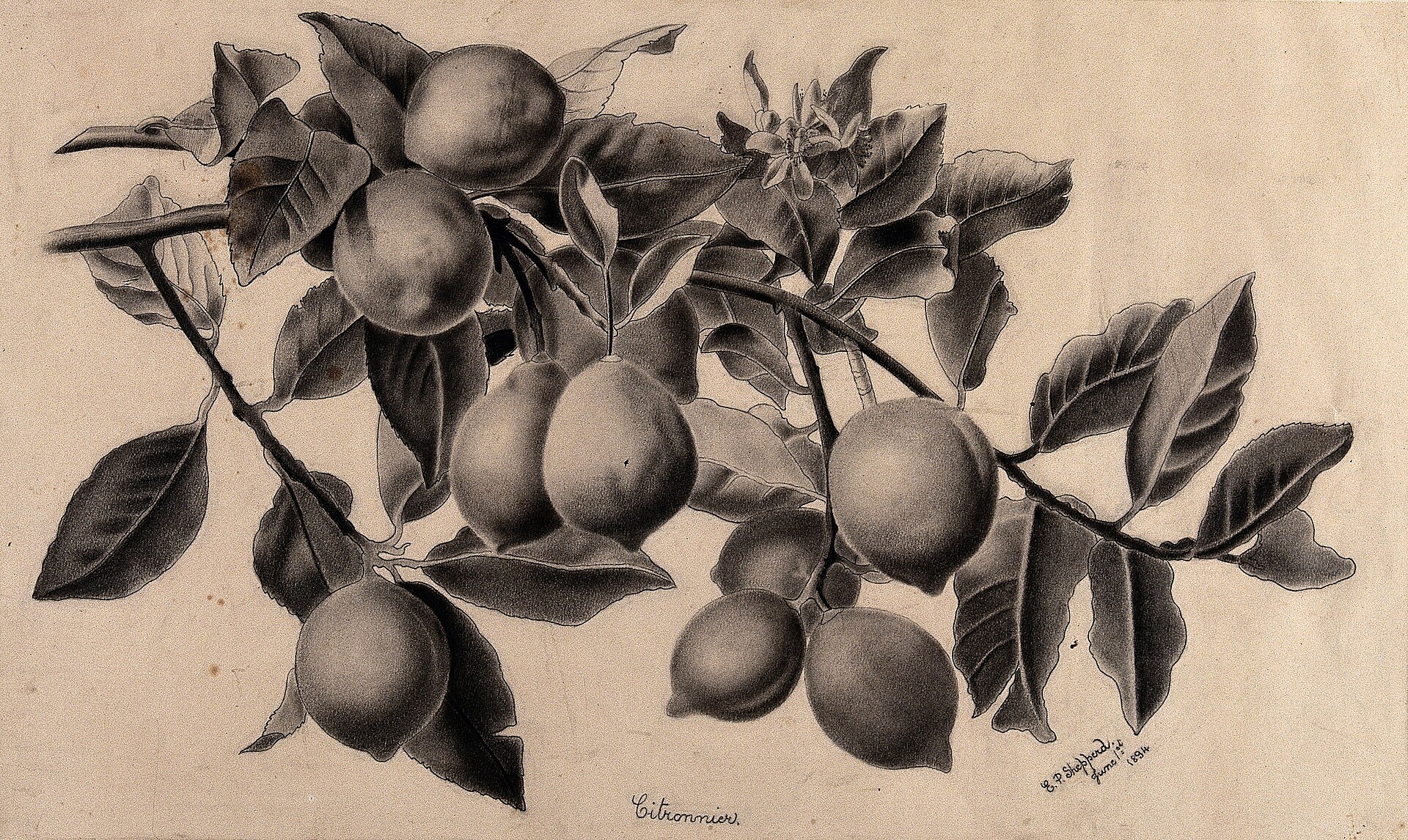
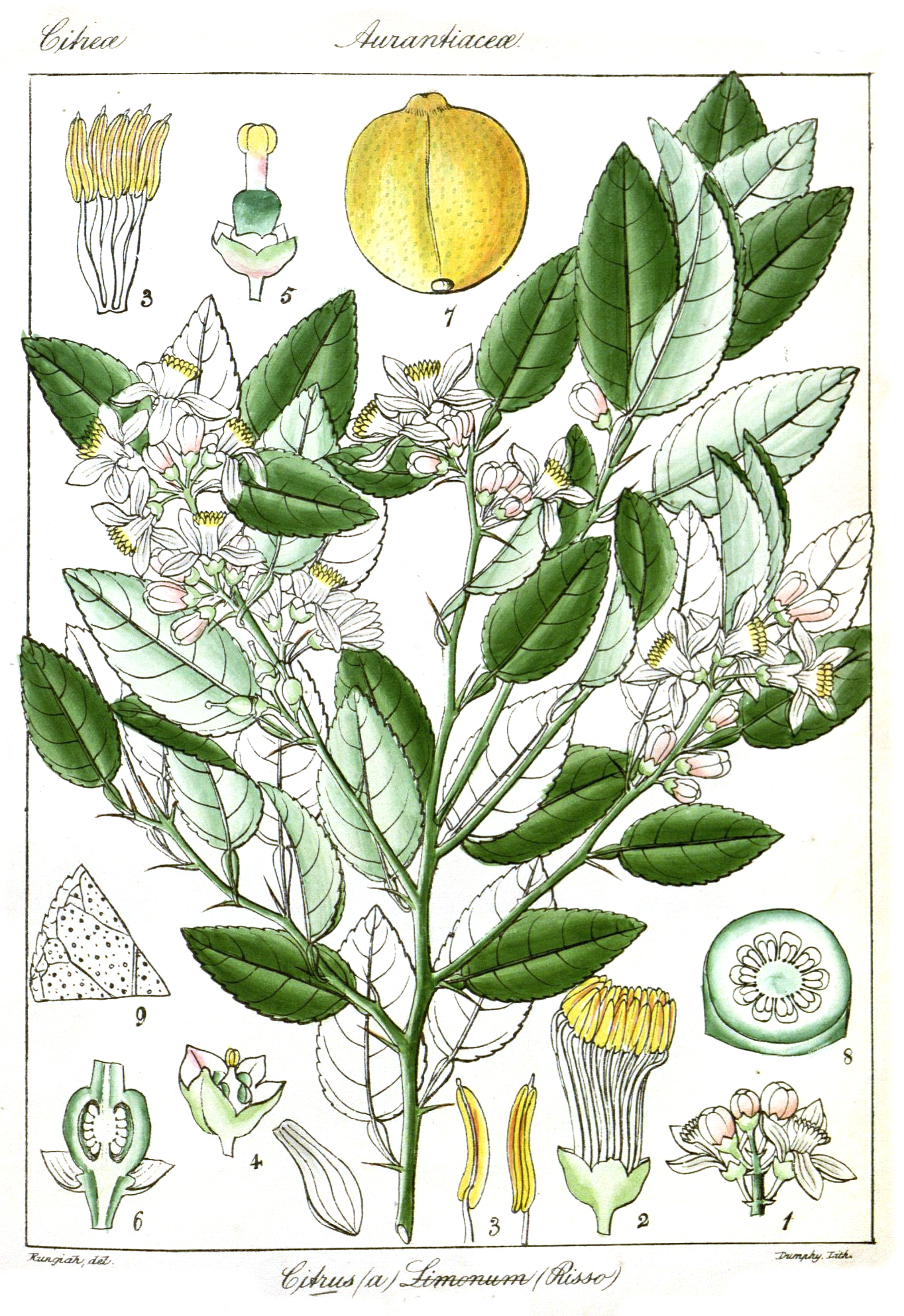
The Scion
Everything above the bud union — the actual lemon variety. This is the genetic identity of your tree. When you scratch bark and find green underneath, this living scion tissue is what you're seeing. The branches you want to recover are all scion wood.
Green cambium under intact bark means the tree is alive and dormant, not dead. The engine is running — the windows are simply dark.
The scratch test
Your most important diagnostic tool requires nothing but a fingernail. What you see beneath the bark tells you everything about whether a branch can be saved.
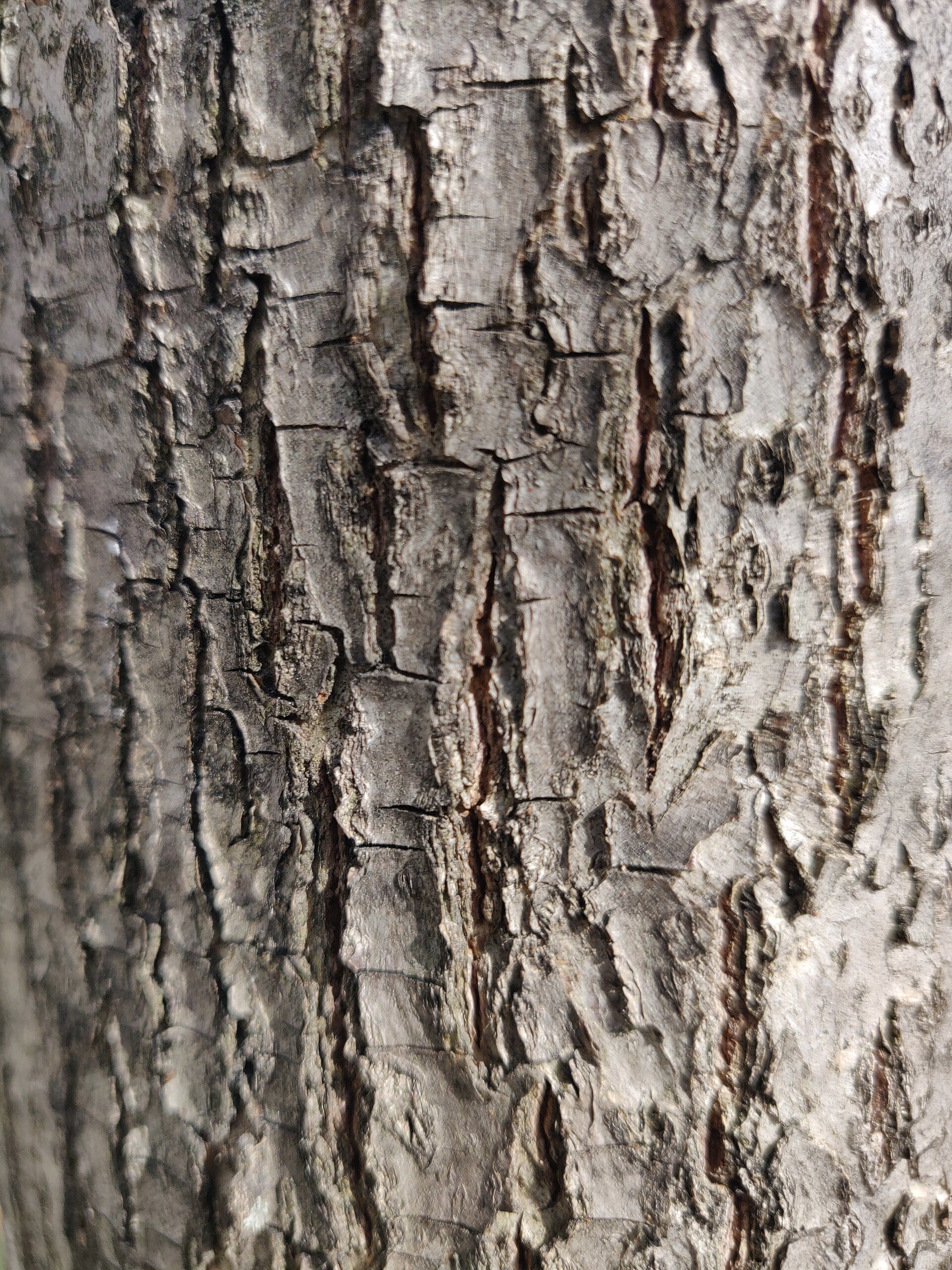
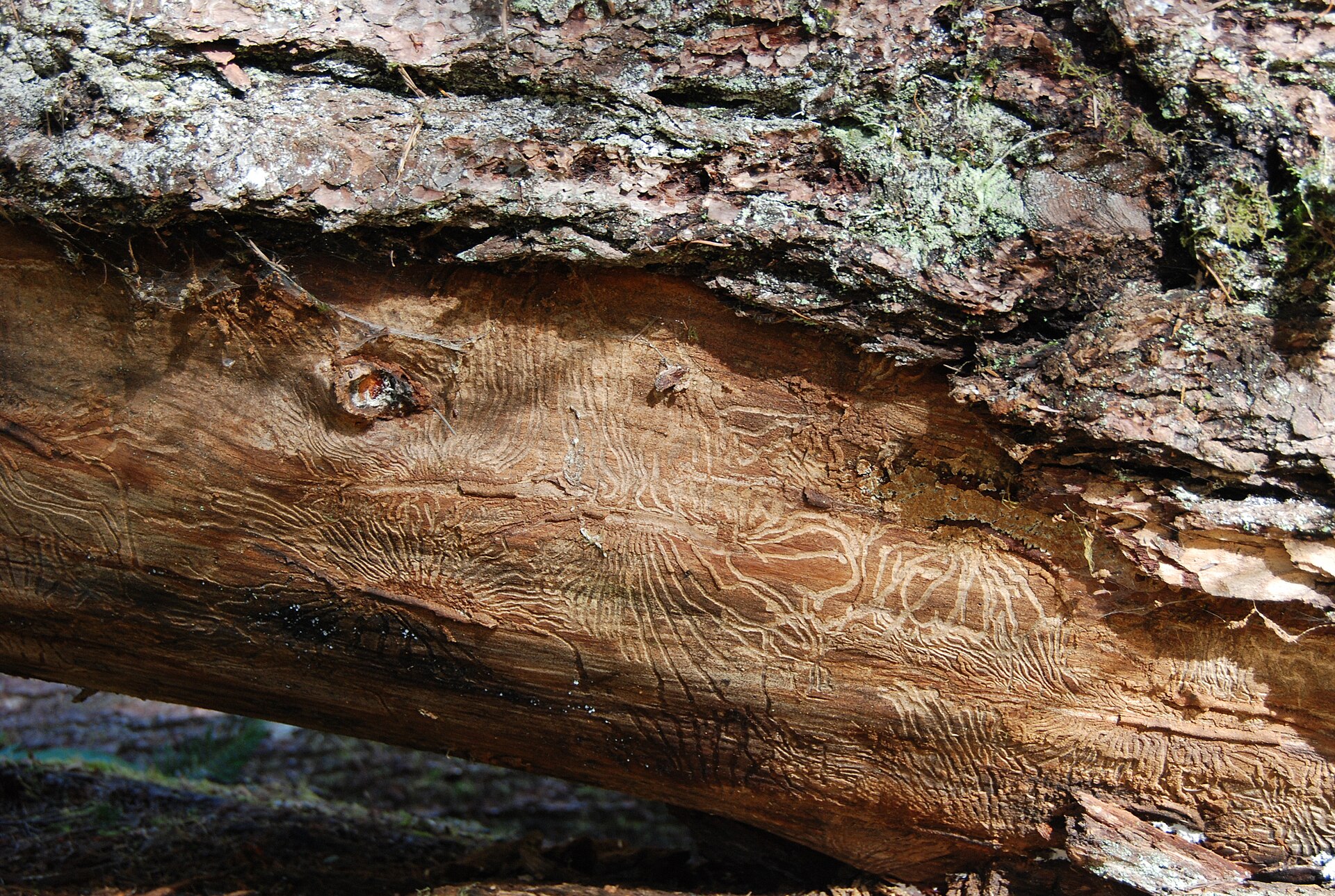
Take your thumbnail to any branch you're uncertain about. Press firmly enough to break through the thin outer bark, but not so hard that you gouge the wood underneath. The exposed layer — what botanists call the cambium — is the tree's vascular tissue, the thin band of living cells responsible for moving water, nutrients, and sugars between roots and leaves. This is where life either persists or has fled.
Green beneath
Bright or pale green tissue means the cambium is alive. The branch may be dormant or stress-suppressed, but it has the vascular capacity to push new growth. Do not remove this branch — it's a candidate for stimulation.
Brown beneath
Dry, brown, or hollow tissue means the cambium is dead. No water can flow through this branch — it cannot leaf out. Test 6–12 inches further down; sometimes only the tip is dead and the rest of the branch is still alive.
Mapping your tree
The mistake most people make is testing one or two spots and drawing conclusions about the whole tree. Crown dieback is irregular: a tree can have entirely dead upper branches above completely viable lower wood, or one whole side compromised while the other thrives. Test broadly before you cut anything.
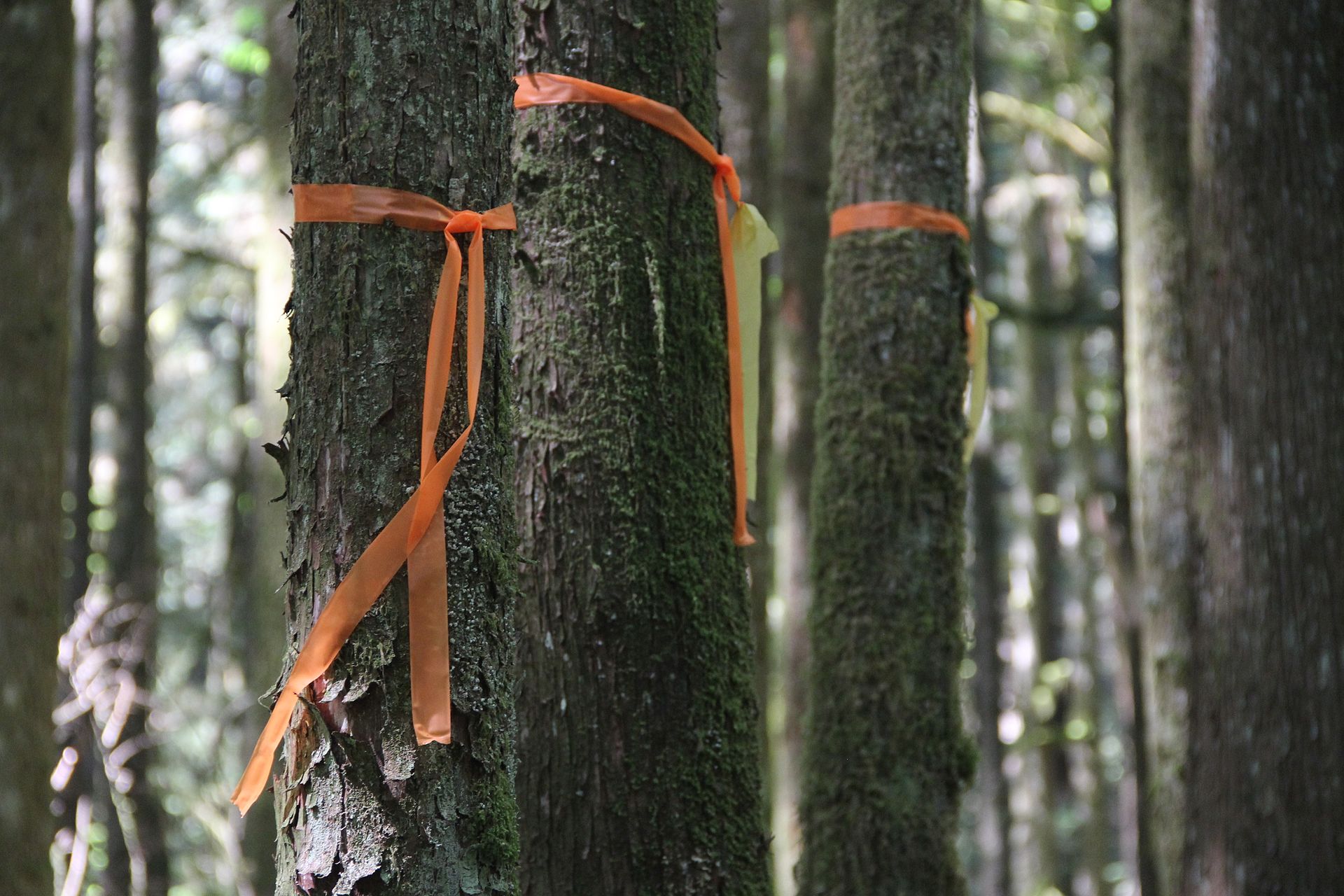
Carry colored tape with you and mark each branch as you test — green tape for live cambium, red tape for dead. Test at the tip, at the midpoint, and where the branch joins a larger limb. A dead 18-inch tip on an otherwise living branch is no cause for alarm; an entire structural limb showing brown throughout is a different conversation.
The language of thorns
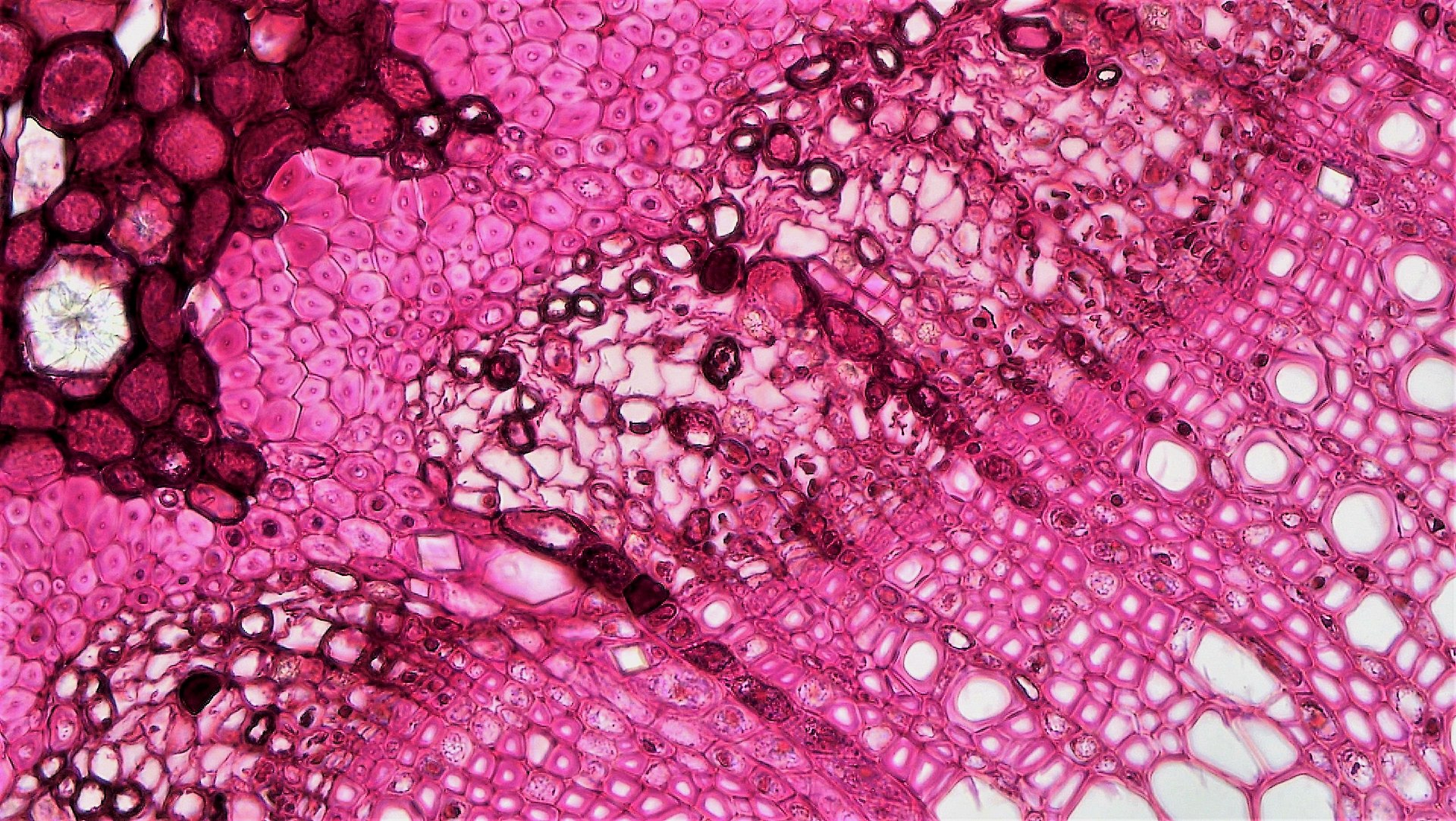
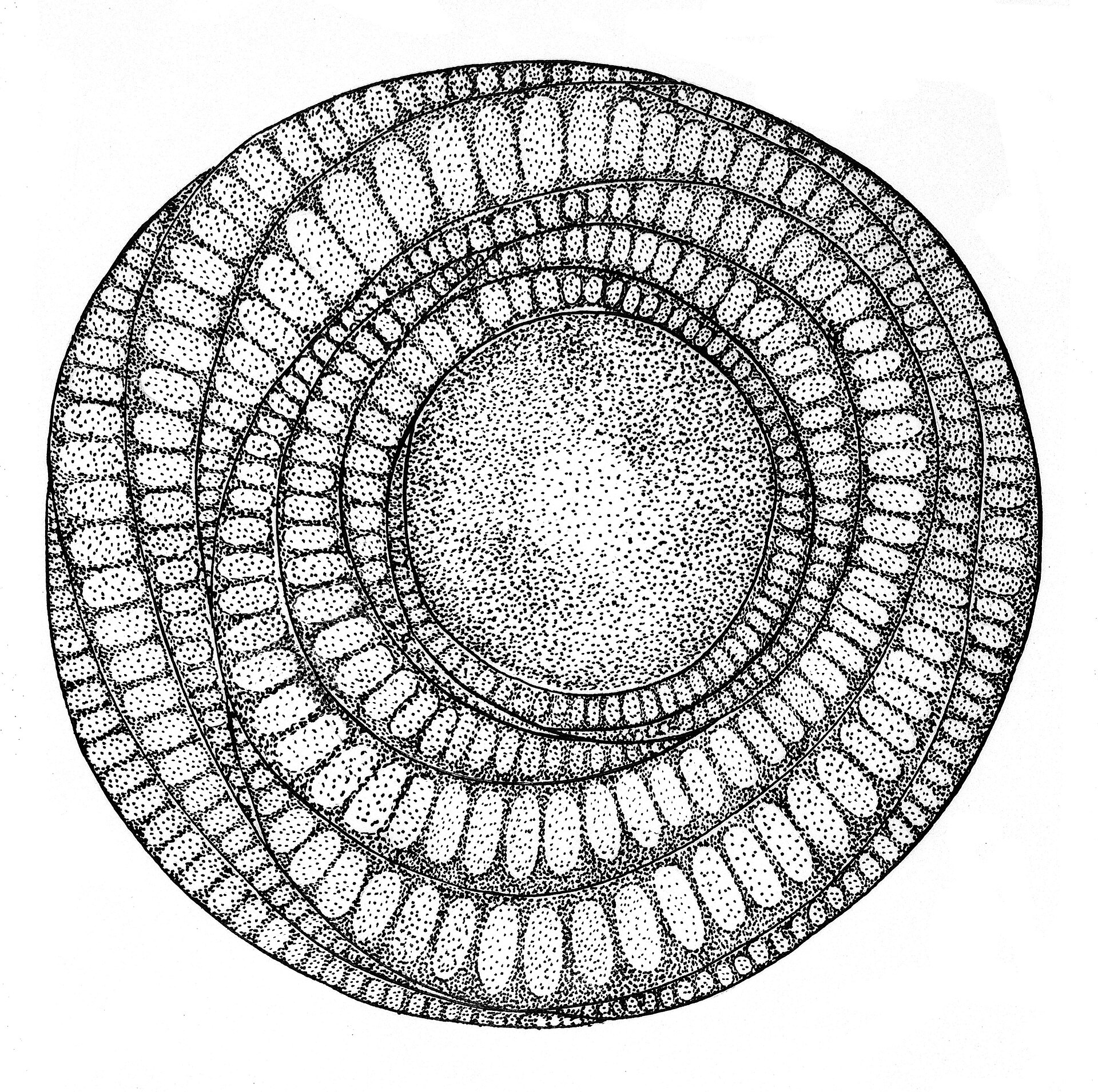
Thorns on your tree aren't just a nuisance — they're a diagnostic signal. Where they appear and what their leaves look like tells you whether you're seeing your lemon variety or a hostile takeover.
Citrus produces thorns most aggressively when it's young or when it's putting out vigorous juvenile-style growth. As wood matures into productive fruiting branches, thorns diminish or disappear entirely. So mature, lightly-thorned wood on your established canopy is normal and good — that's your fruiting wood, doing its job.
But when you find aggressively thorned shoots near the base of the trunk, especially low on the rootstock or coming up from soil level, you've found something else entirely. Most common citrus rootstocks — Trifoliate orange, Carrizo citrange, Swingle citrumelo — are notoriously thorny. They are also genetically distinct from your lemon scion, which means any growth they push out will produce inedible fruit and, if left unchecked, will eventually outcompete and dominate the canopy you're trying to save.
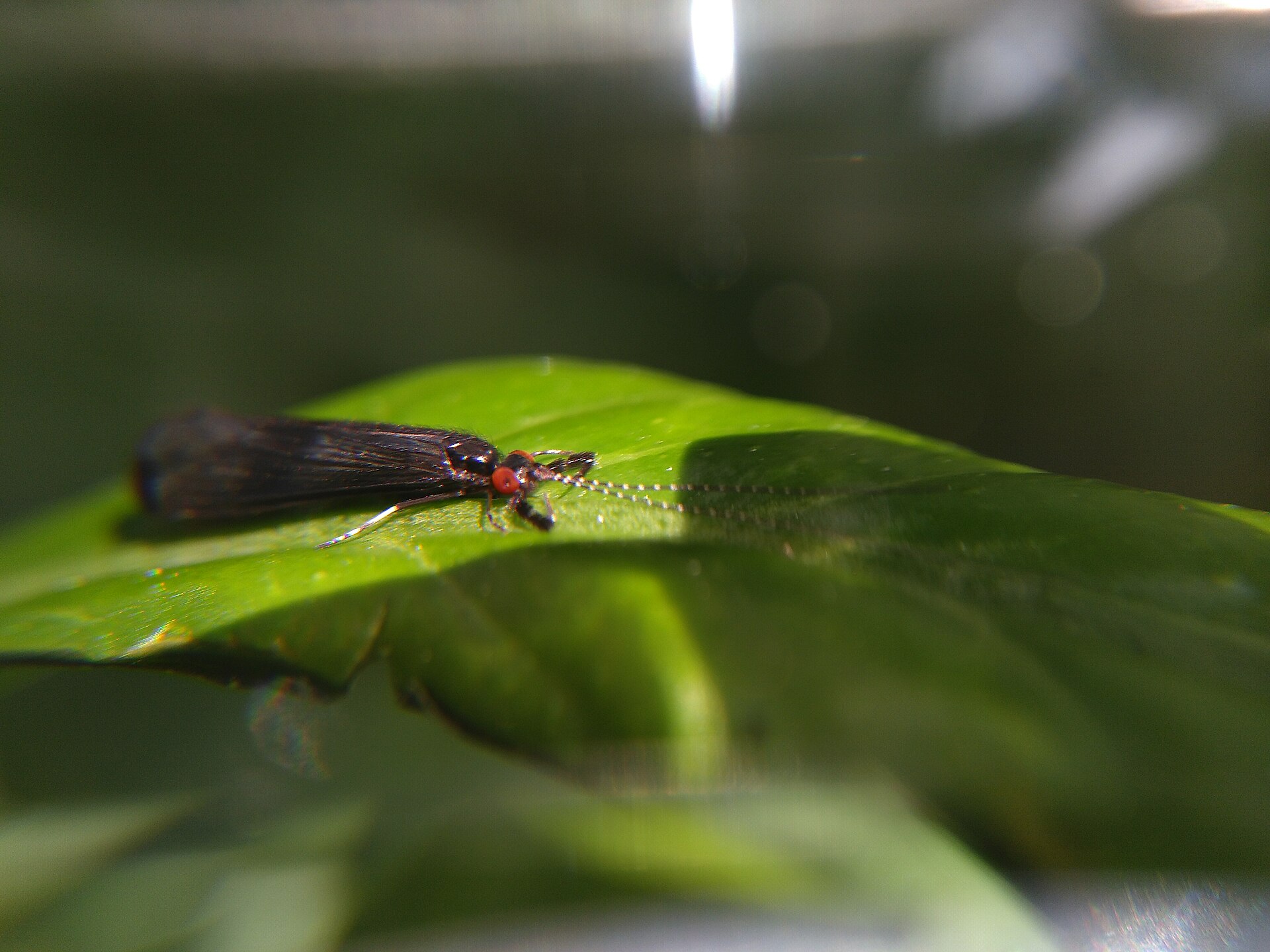
Lemon Scion
One oval leaf blade, often with a small wing on the petiole stem. Rich green, glossy surface. This is what your lemon variety produces — your tree, doing what you want it to do. Branches with these leaves are your fruiting wood.
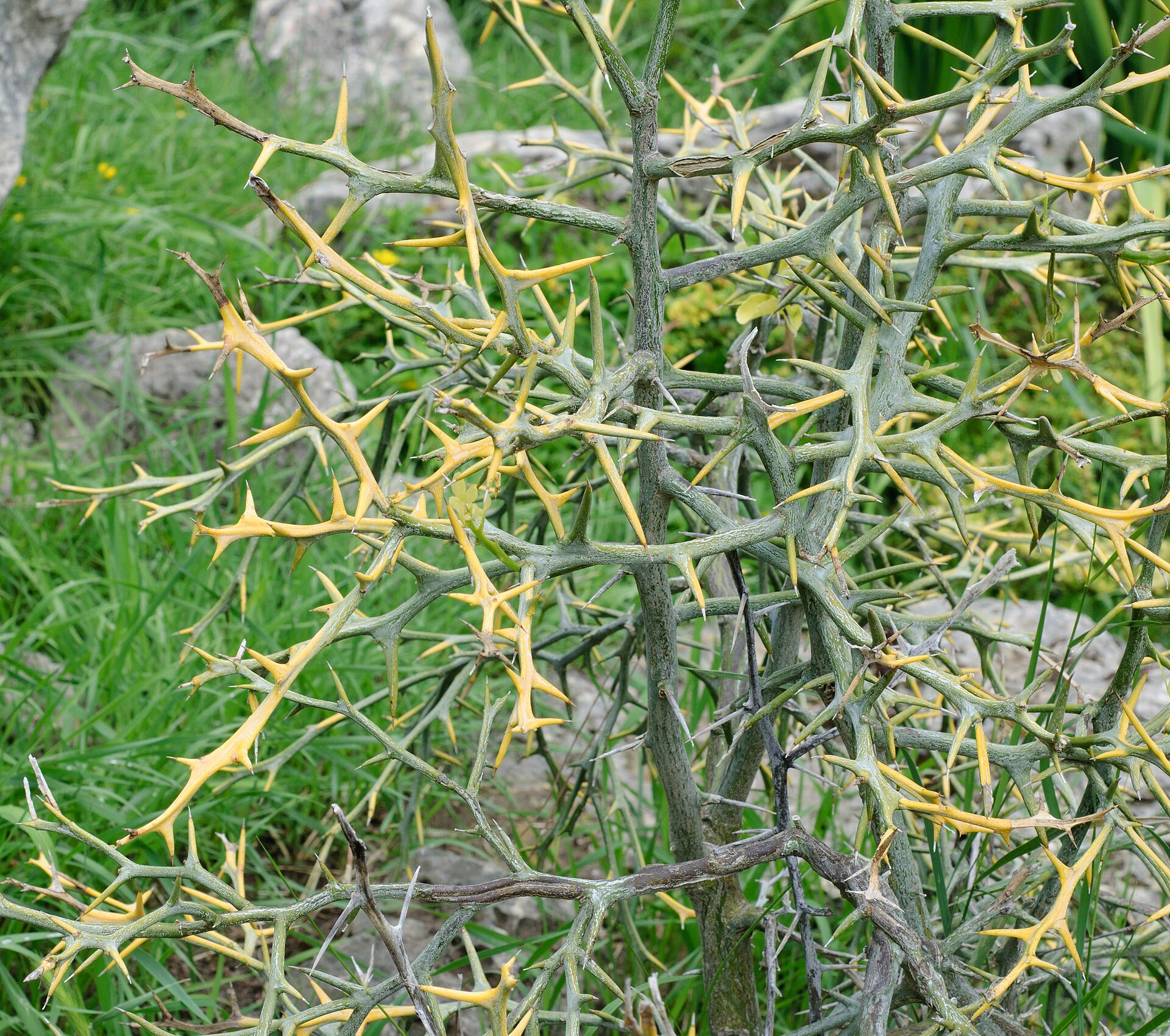
Rootstock Sucker
Three distinct leaflets joined at one stem — the trifoliate orange hallmark. Often thornier, with a slightly different green. This is the wrong tree, trying to take over. The base is also frequently armed with sharp thorns.
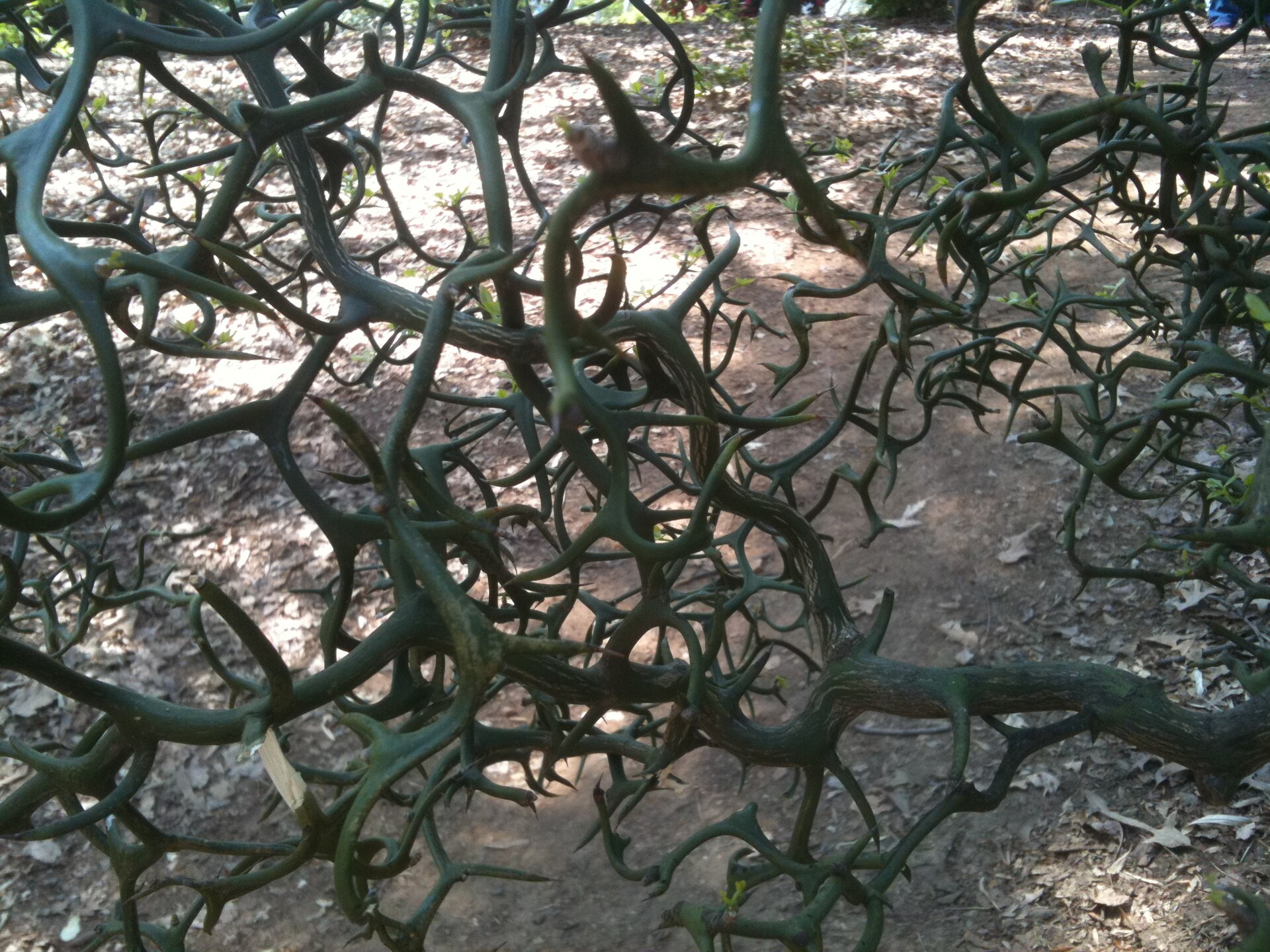
Plate III-B · Poncirus trifoliata 'Flying Dragon' — the aggressive thorns and contorted stems typical of rootstock growth
The three-second rule
When you spot a vigorous shoot anywhere on your tree, ask three questions in sequence:
- Is it above or below the bud union? Below = automatic removal. Above = continue evaluation.
- Does it have one leaf or three? Three leaflets = rootstock sucker that climbed above the union; remove it.
- Is it healthy fruiting wood, or a vertical water sprout? Water sprouts (long, thick, vertical, low-angle) on the scion side waste energy and should be removed at the base — even though they're "your tree."
Three leaflets on one stem, growing from the base — that's not your lemon tree. That's the rootstock trying to claim the canopy.
Three techniques to wake the wood
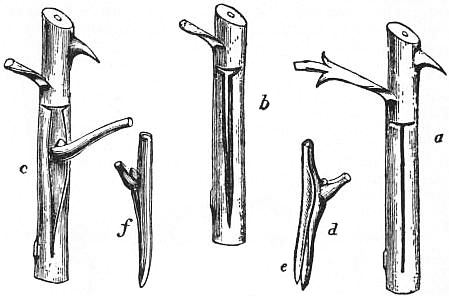
When branches show green cambium but refuse to push leaves, three techniques — escalating in difficulty — can stimulate dormant growth. Start with the gentlest. Move up only if needed.
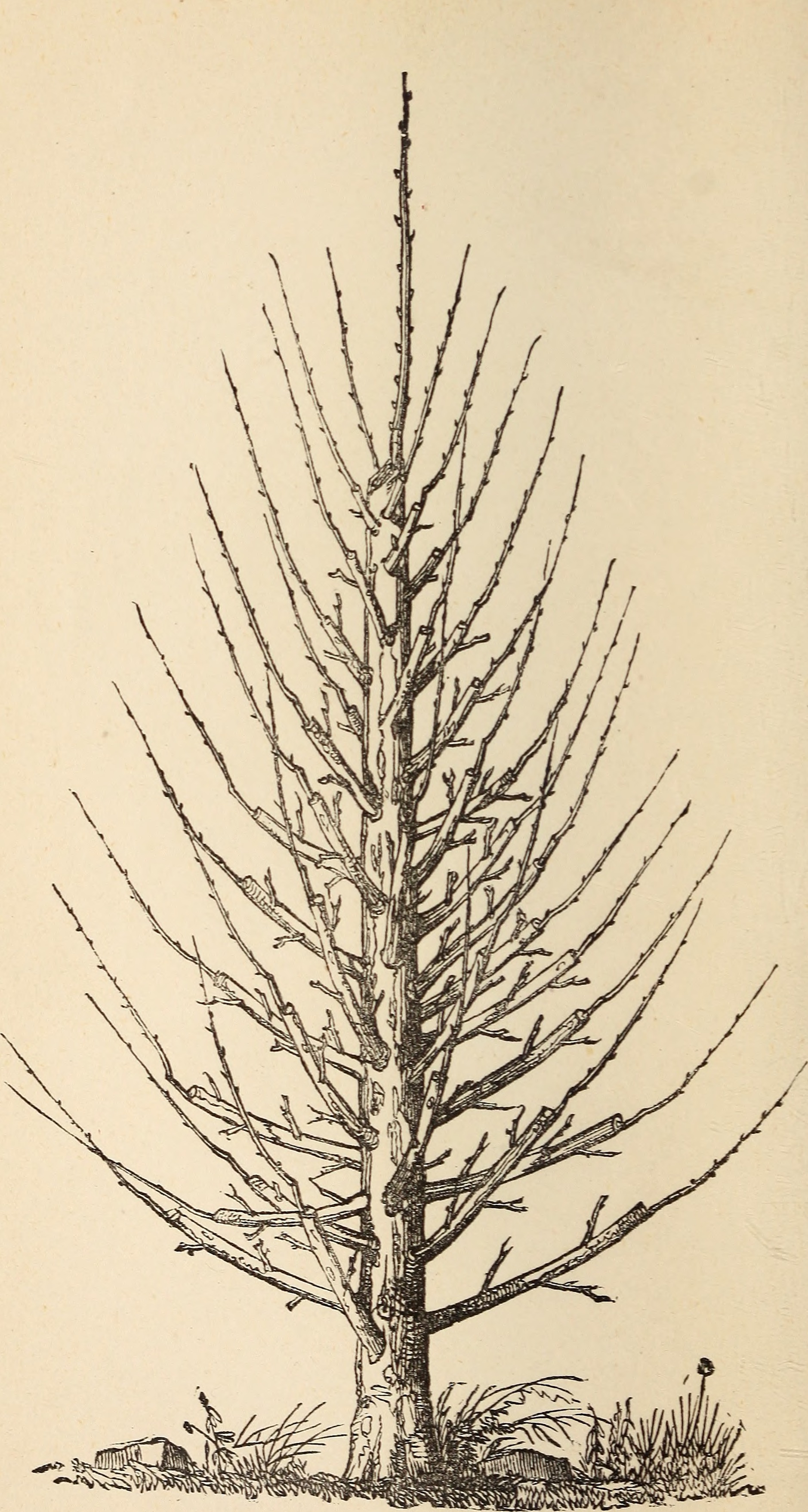
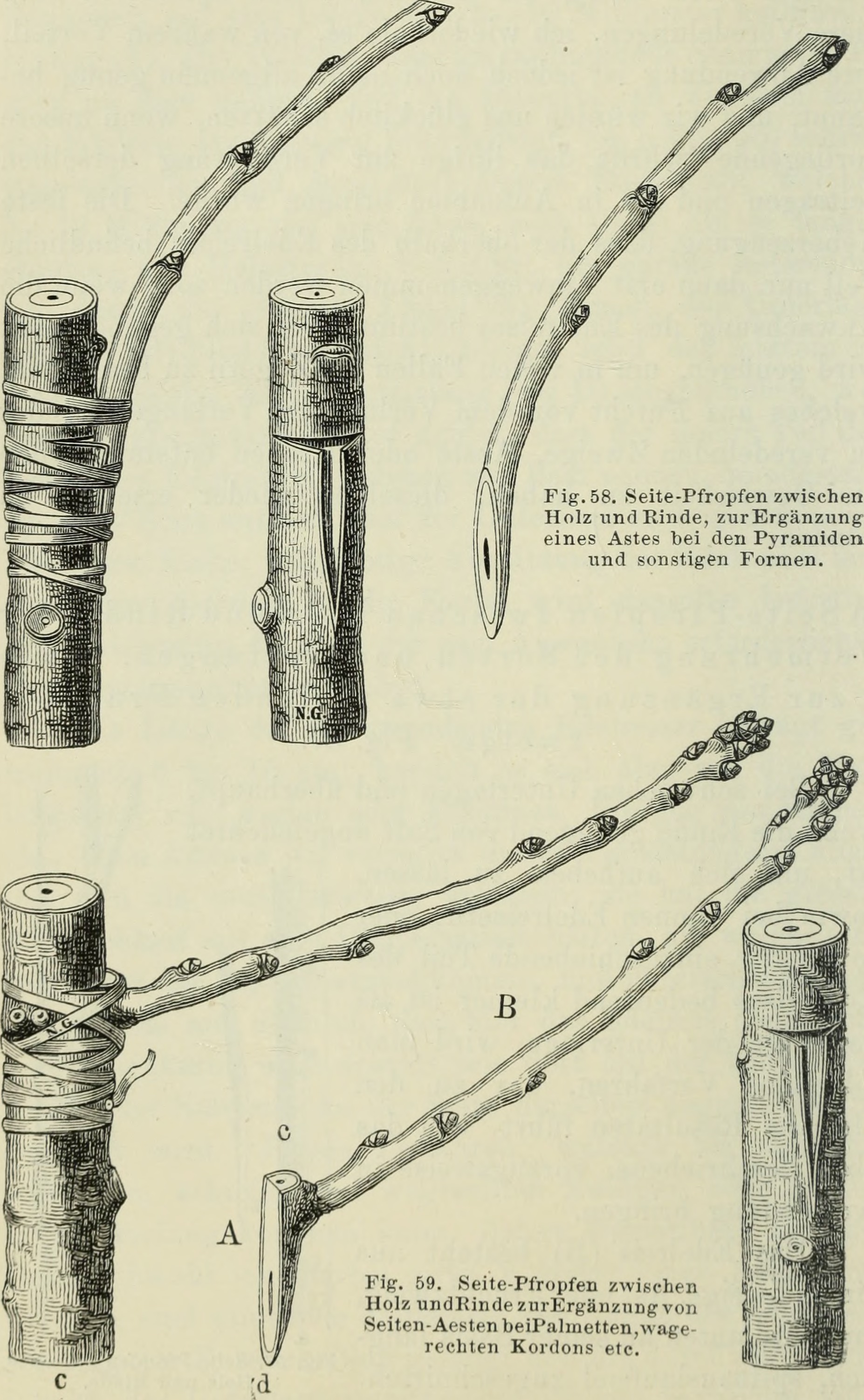
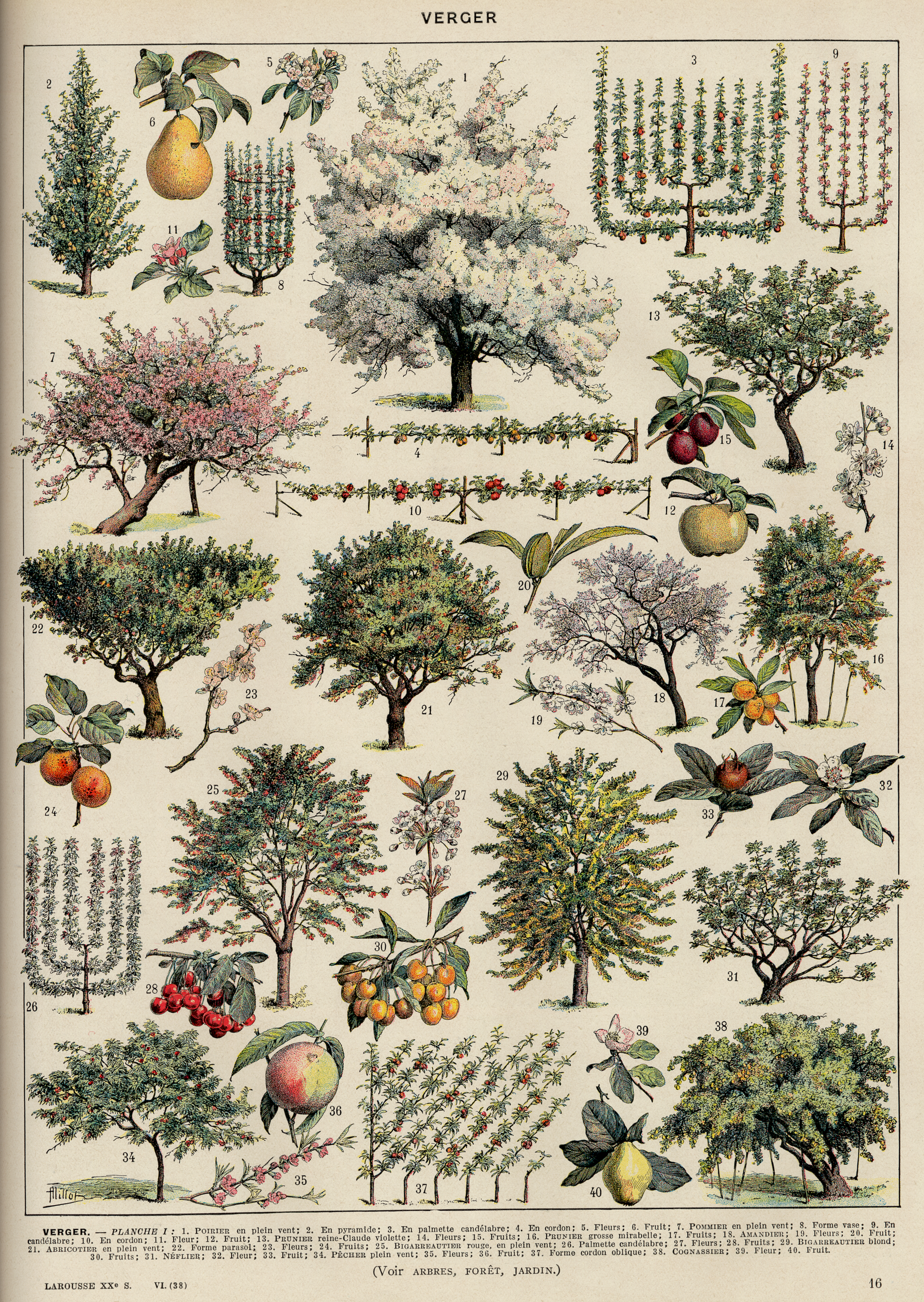
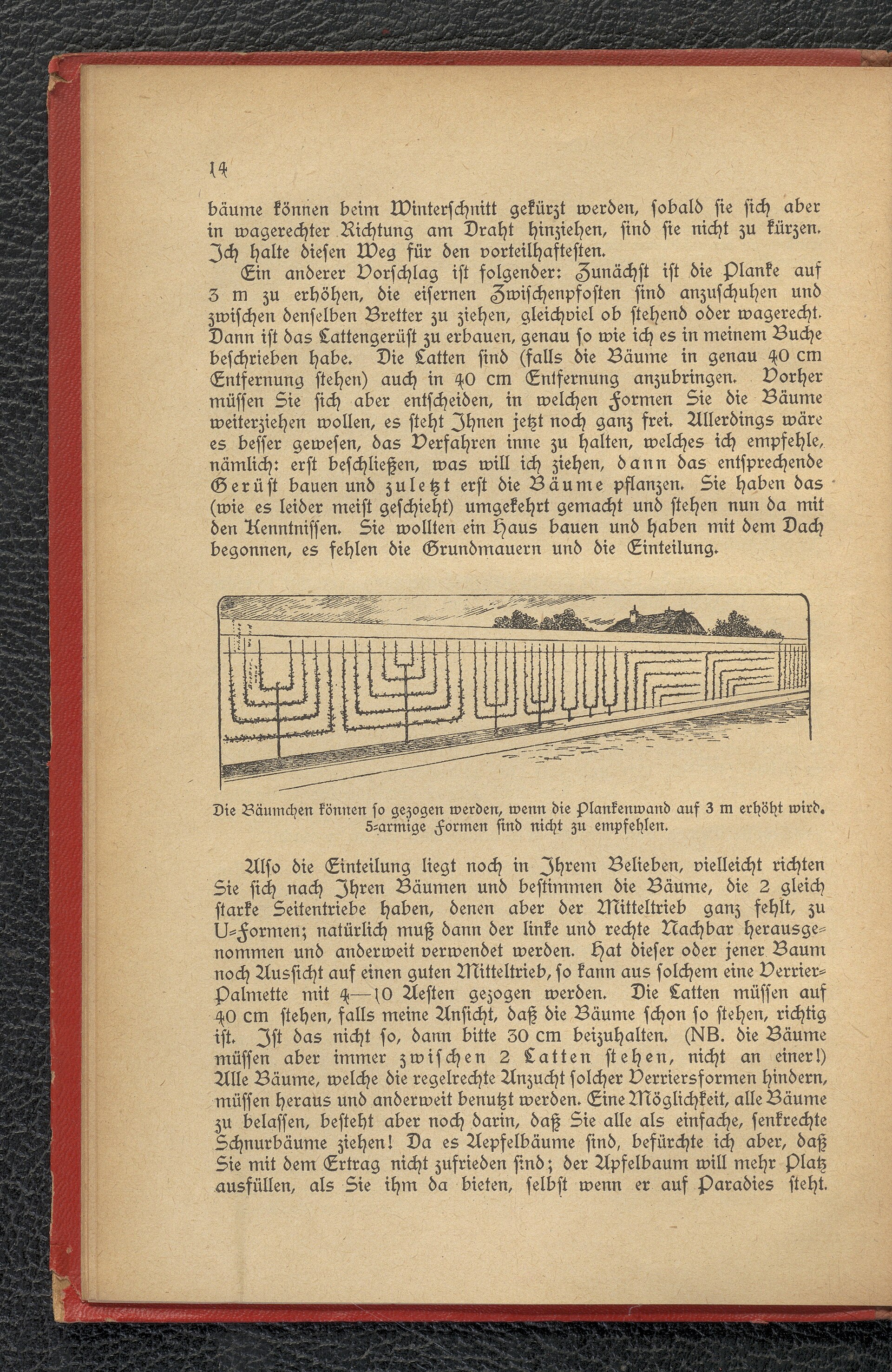
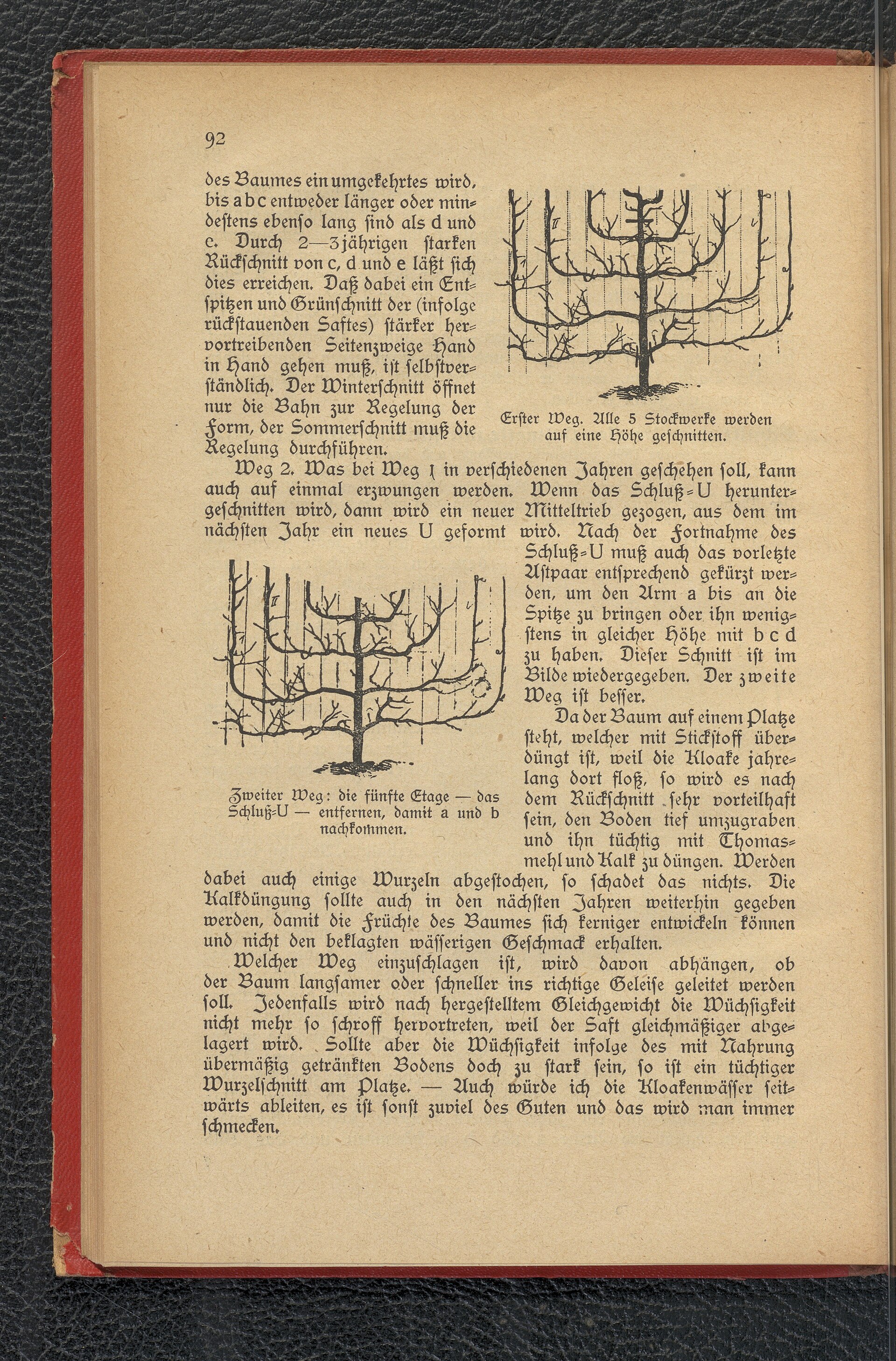
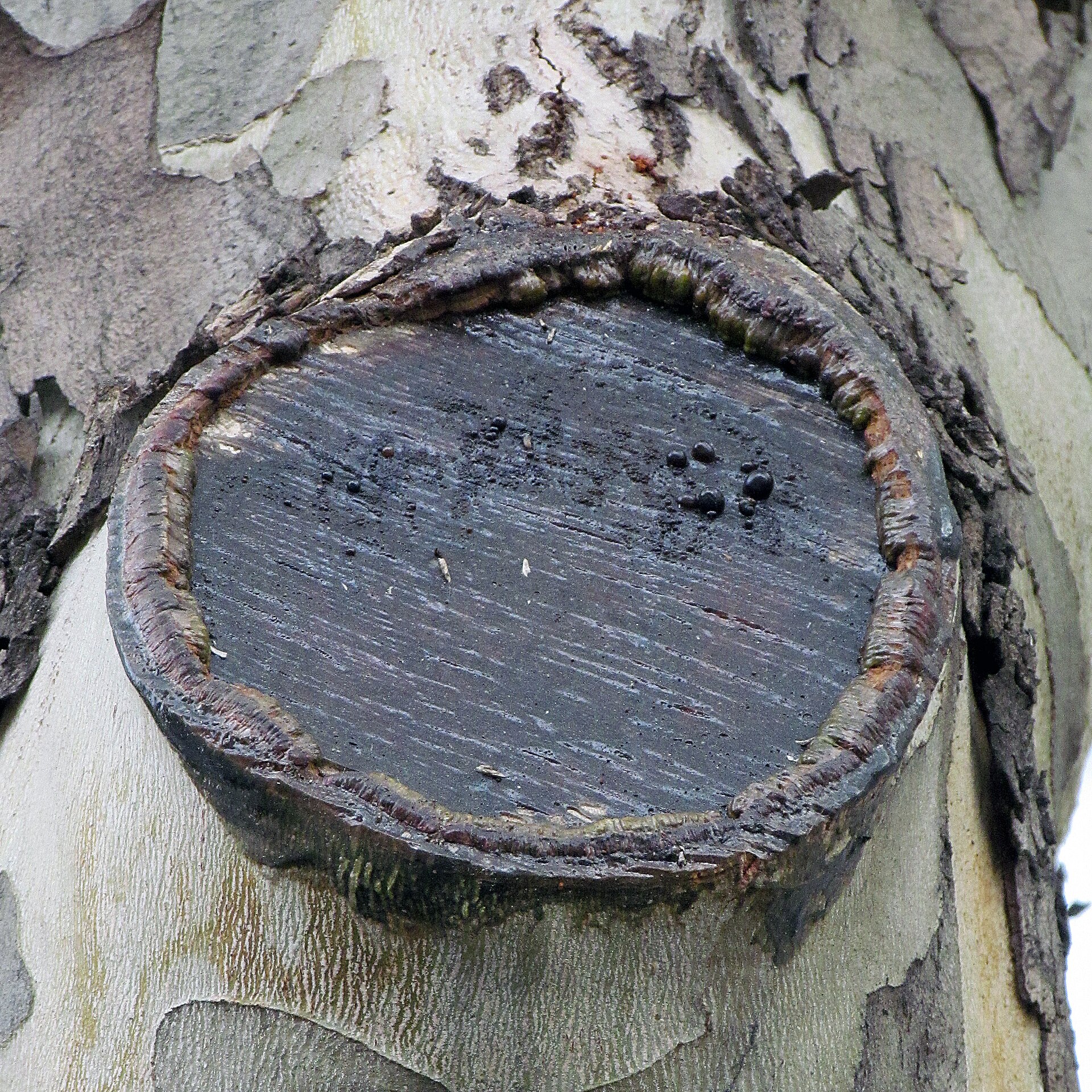
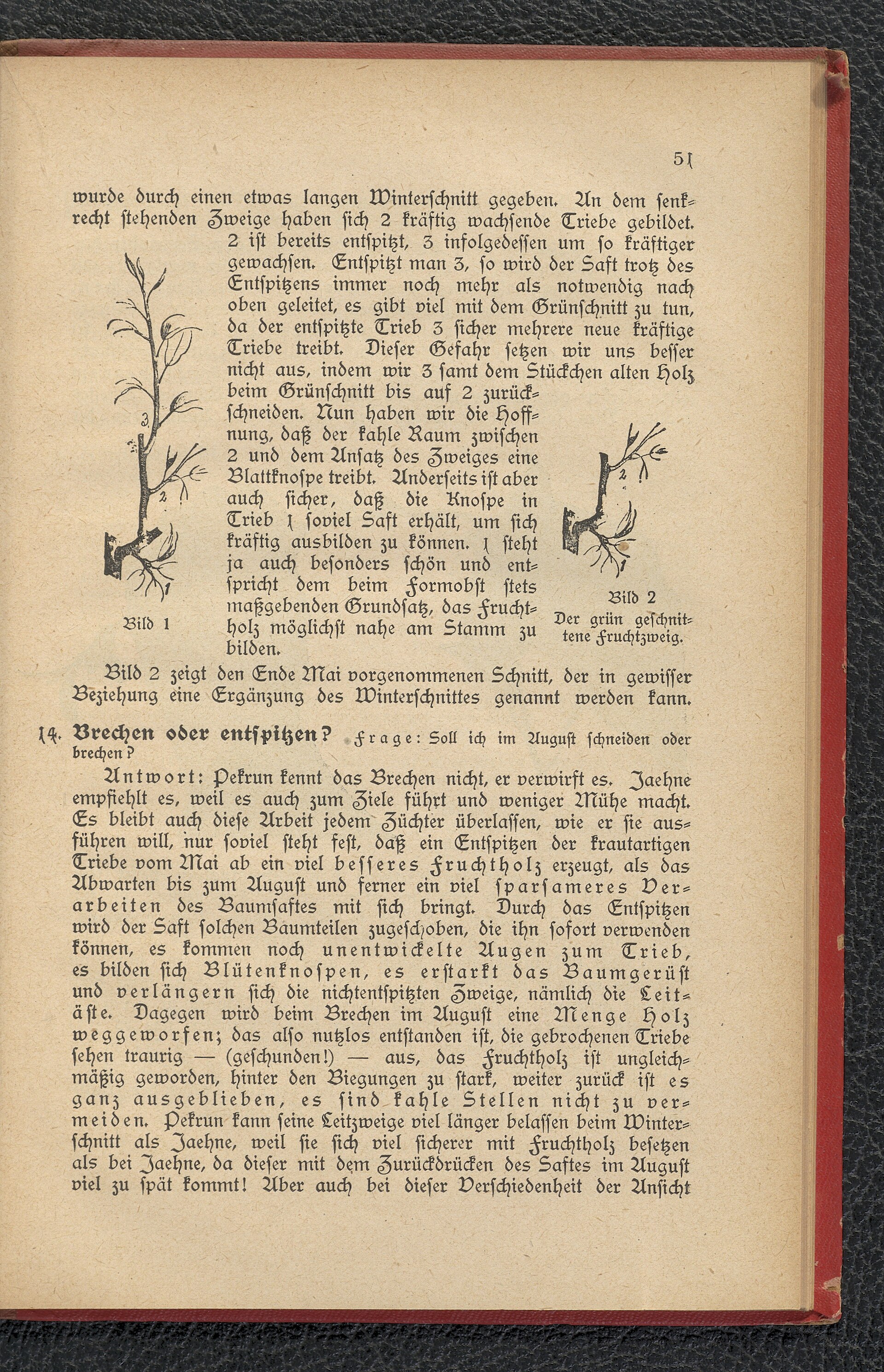
Plate IV-C · Larousse du XXe Siècle, 1932 — A complete visual encyclopedia of orchard management
A graft comes to life
Chip budding on a rose — the same biological process as your citrus T-bud. Watch the graft union heal and the bud push over 20 days.
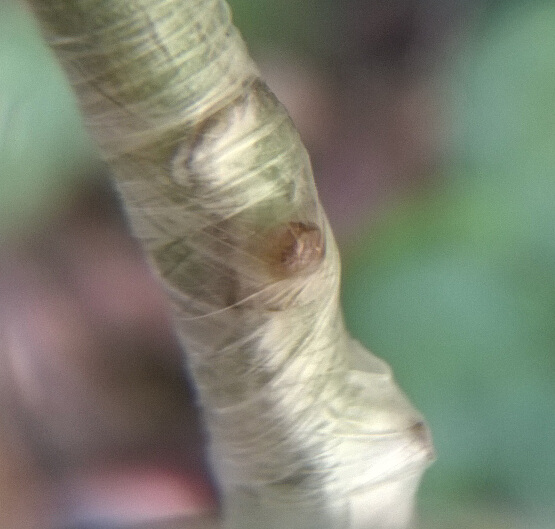
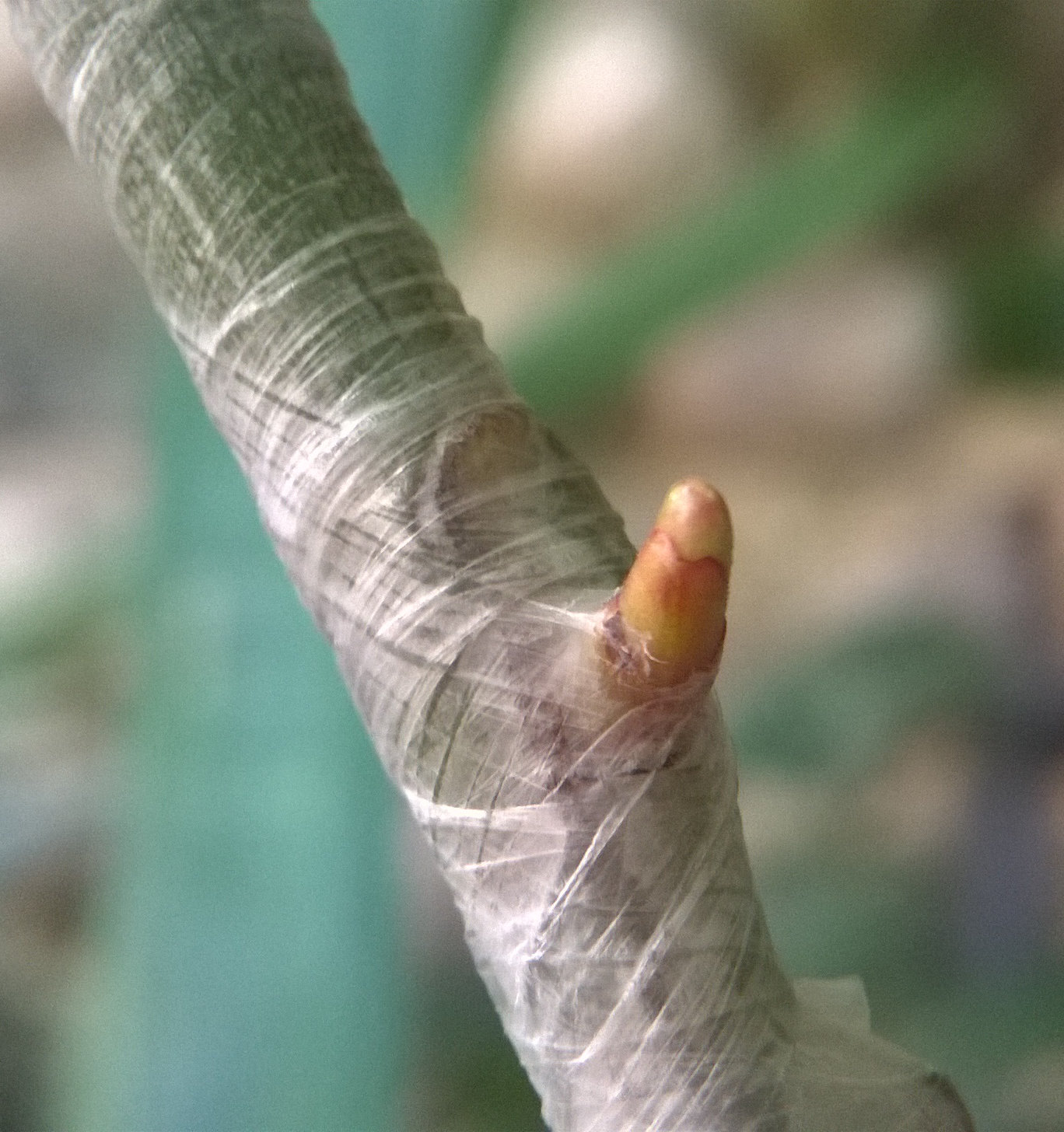
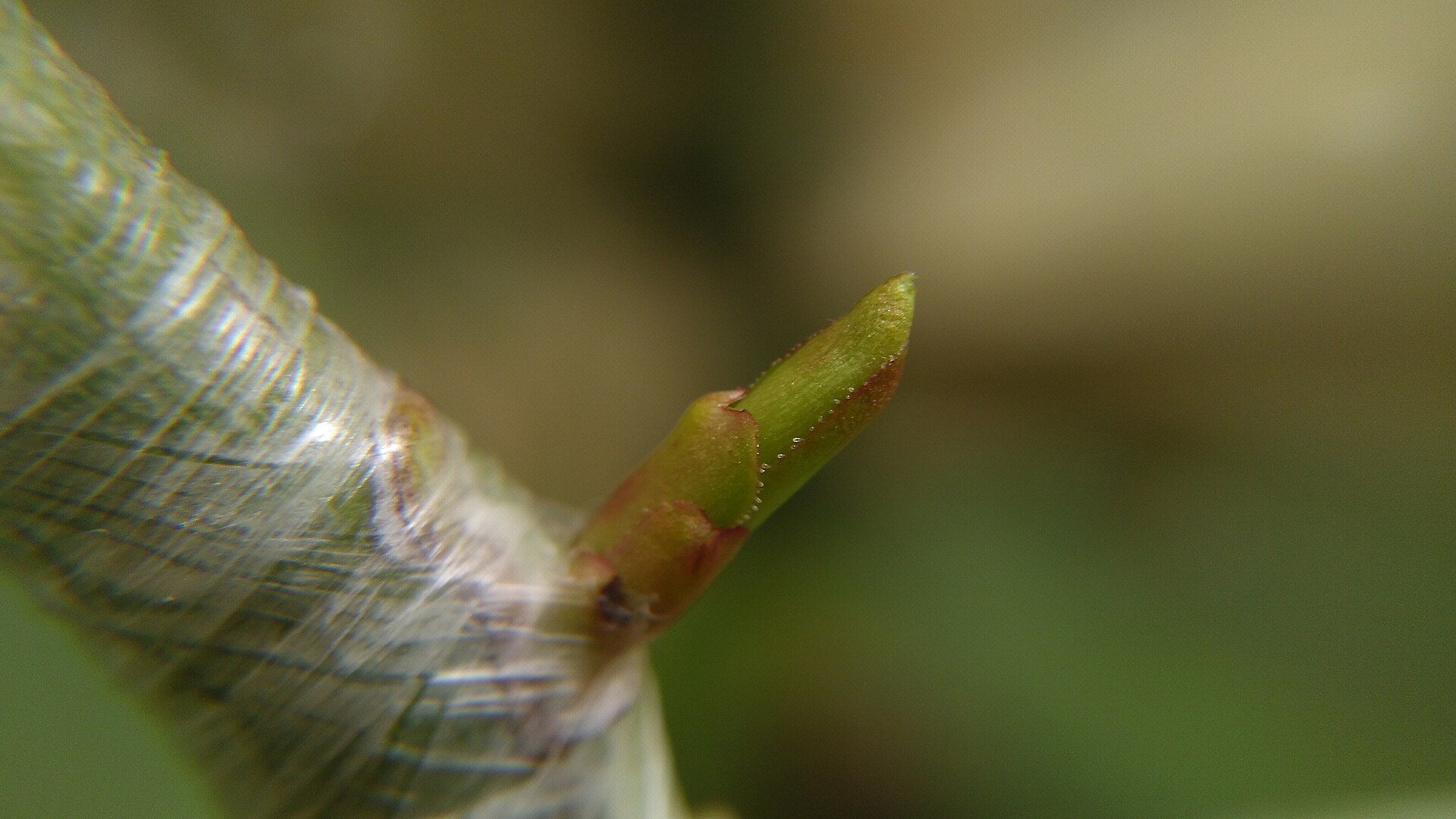
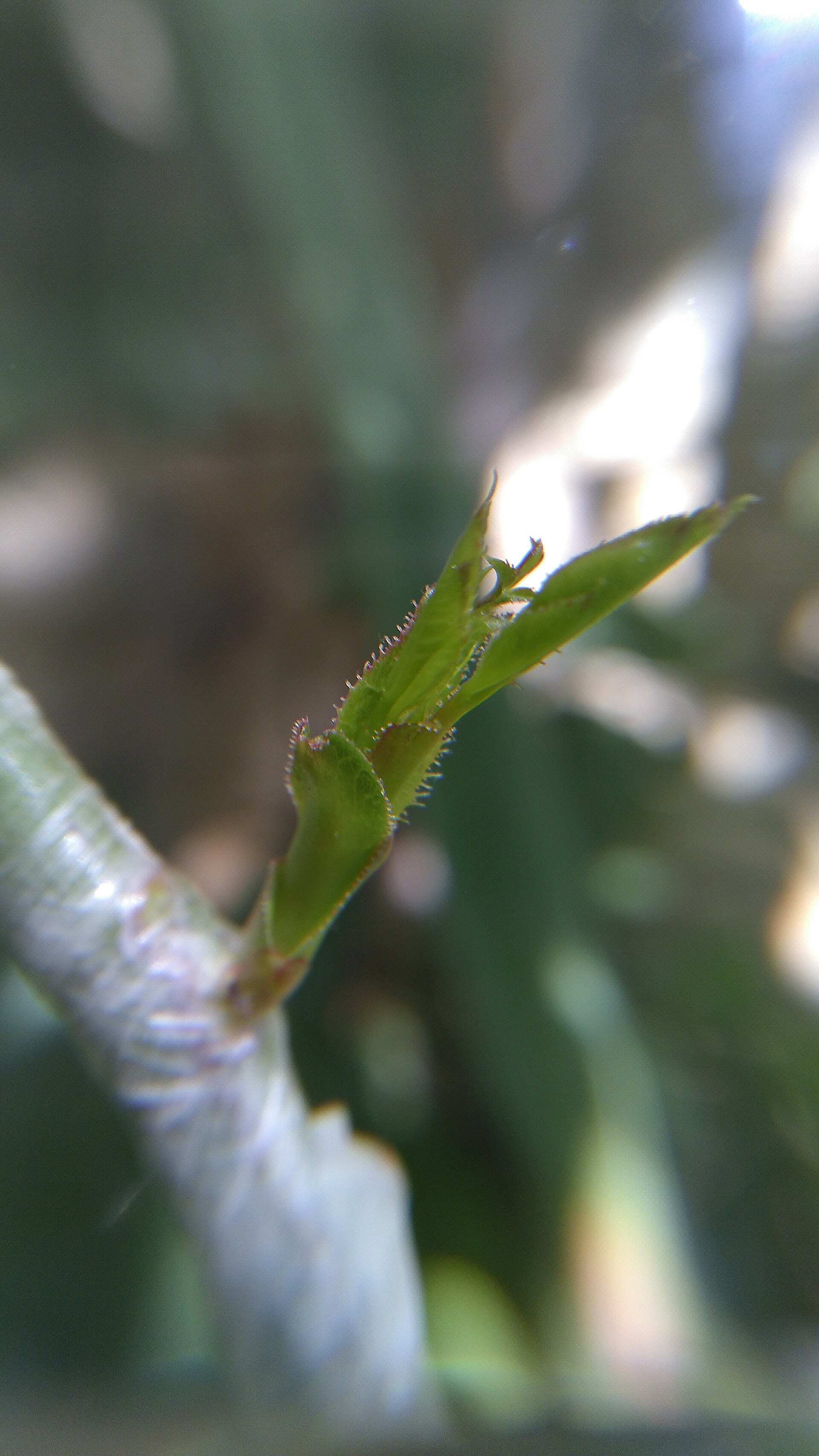
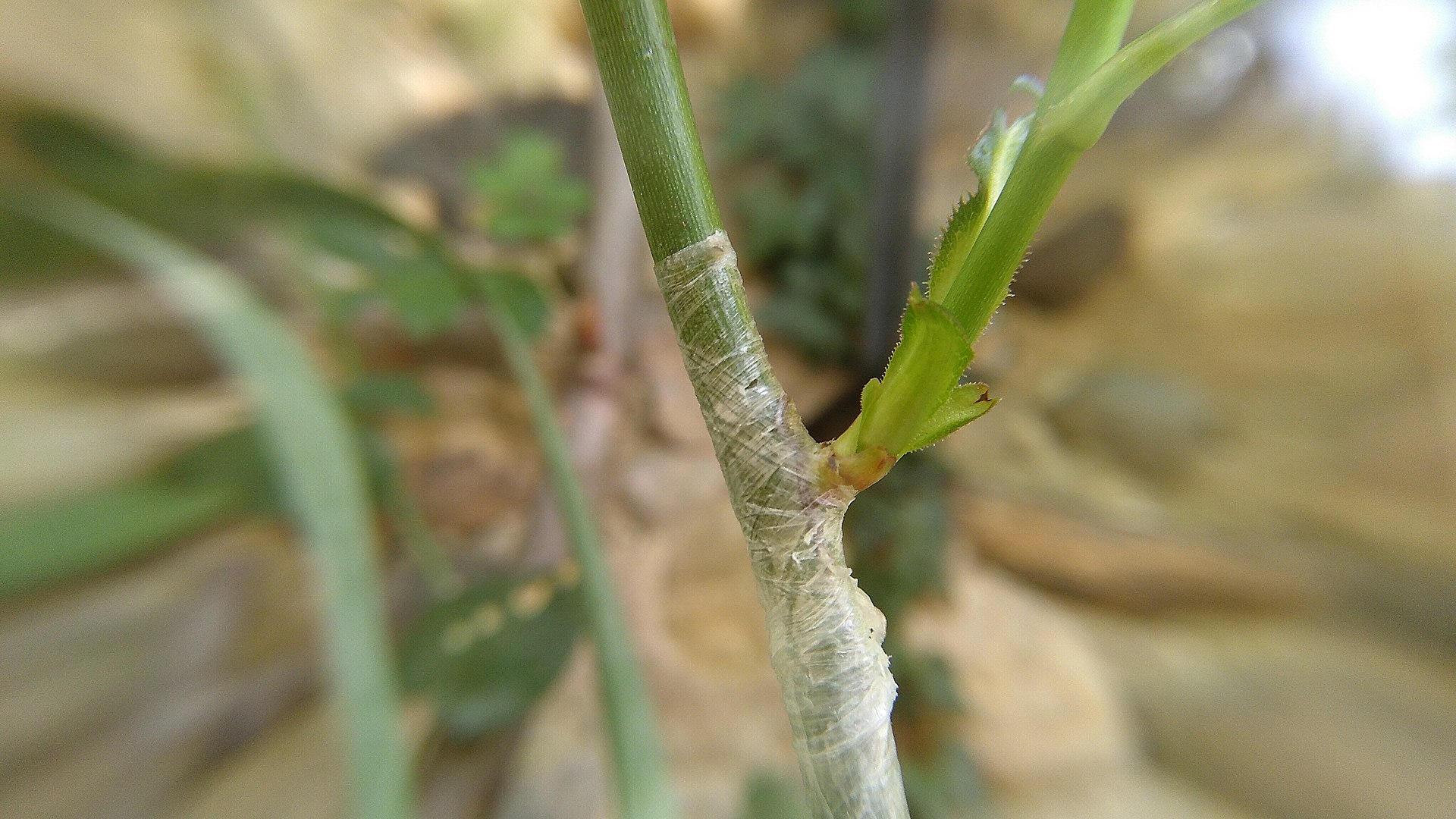
Day 20 · Union healed, tape removed — the bud is alive and beginning to swell. Within weeks it will push new growth.
The recovery journey
Five phases timed to Southern California's coastal seasons. Each builds on the last. Tap any phase to expand the action steps.
Assess & Secure
Map the affected side with the scratch test, eliminate residual beetle threat, protect exposed bark.
Wake the dormant wood
Apply the techniques. Fertilize, water deeply, and use heading cuts and notching to stimulate latent buds.
Assess the response
Identify which branches woke up. Mark non-responders as candidates for fall grafting.
Restore by graft
If branches haven't responded, fall is the second prime grafting window — bark slips, weather supports union formation.
Consolidate & shape
Now you can do the major canopy work — remove dead framework that was shading recovery wood, rebalance the tree.
The essential toolbox
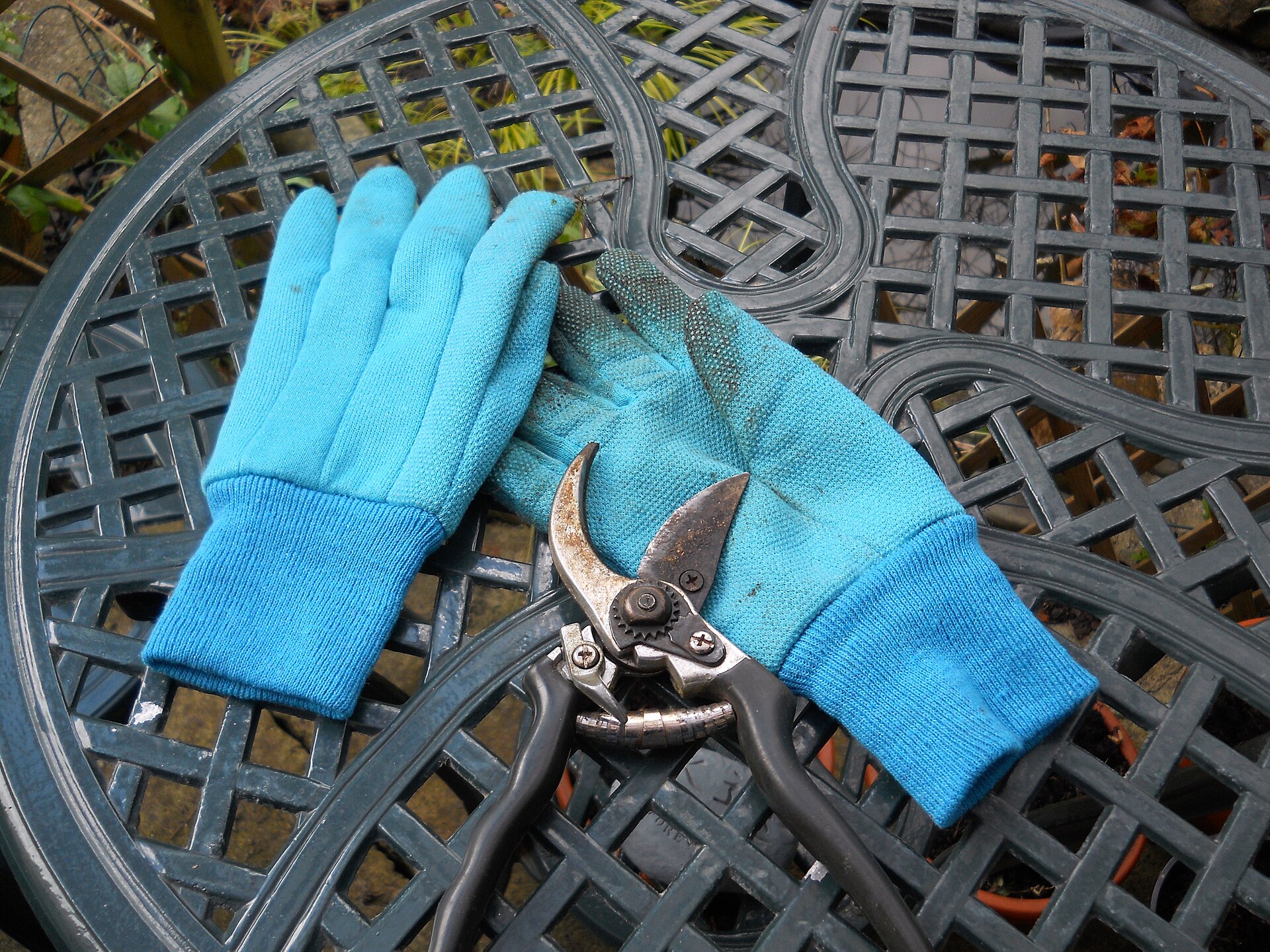
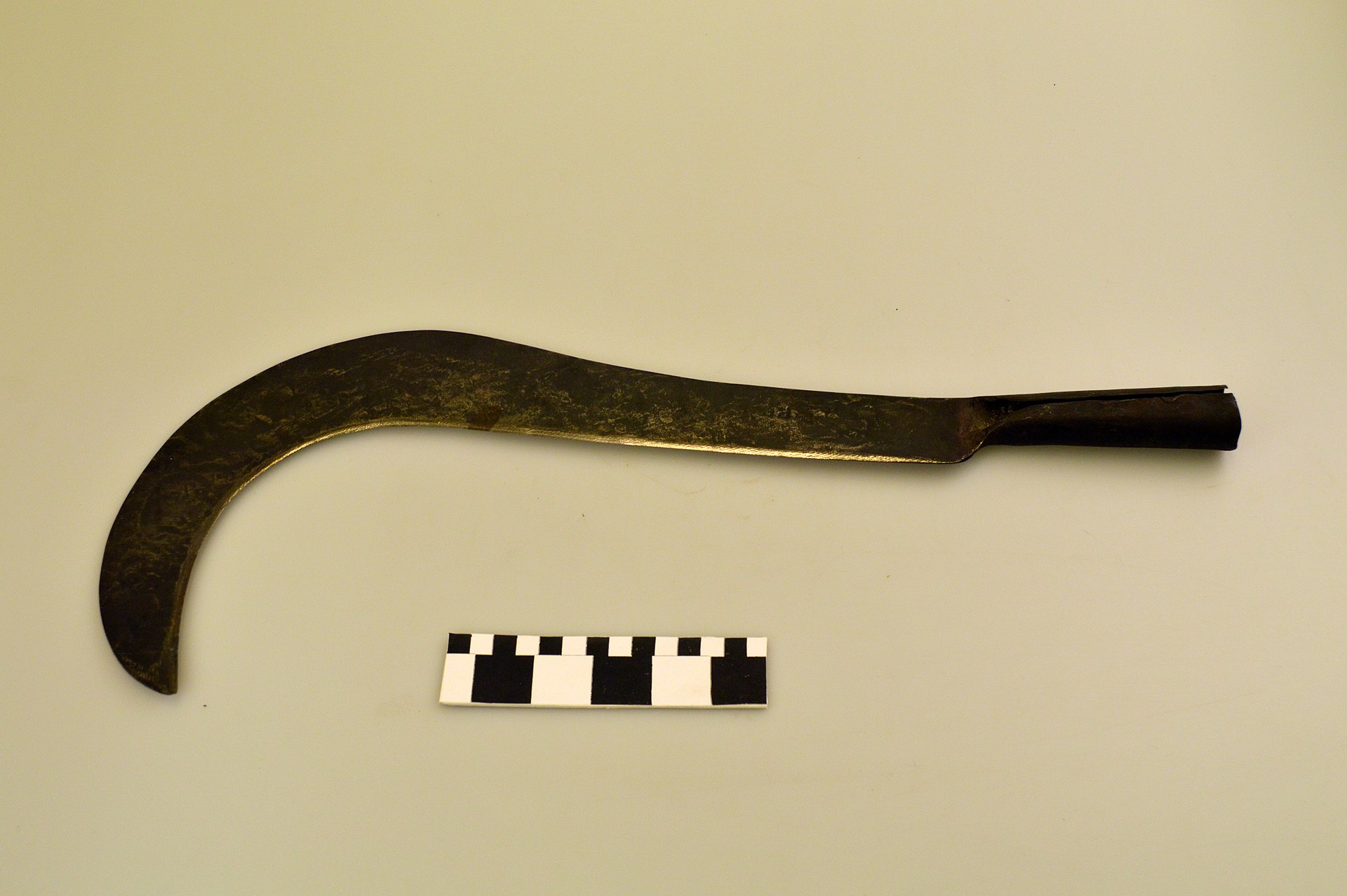
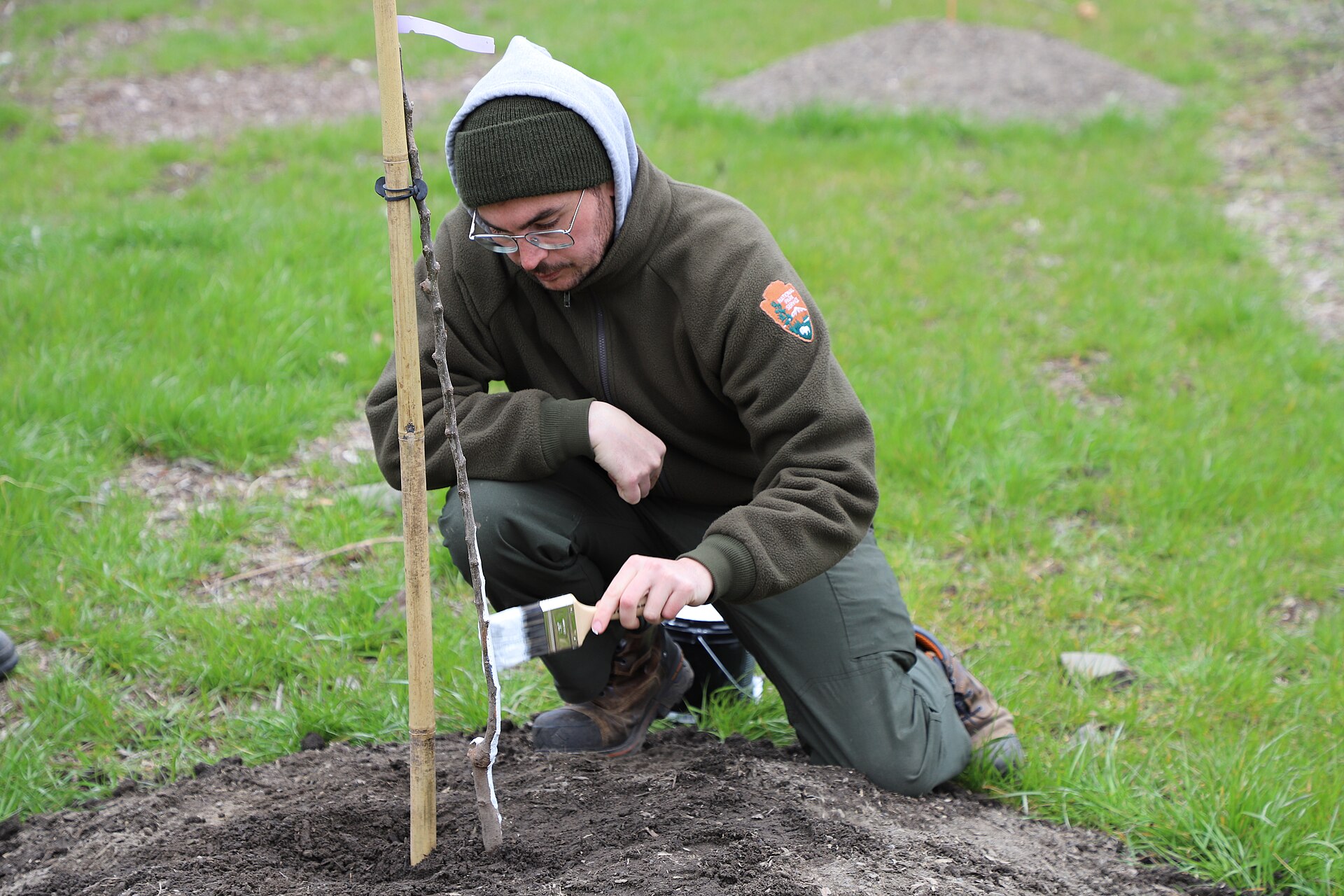
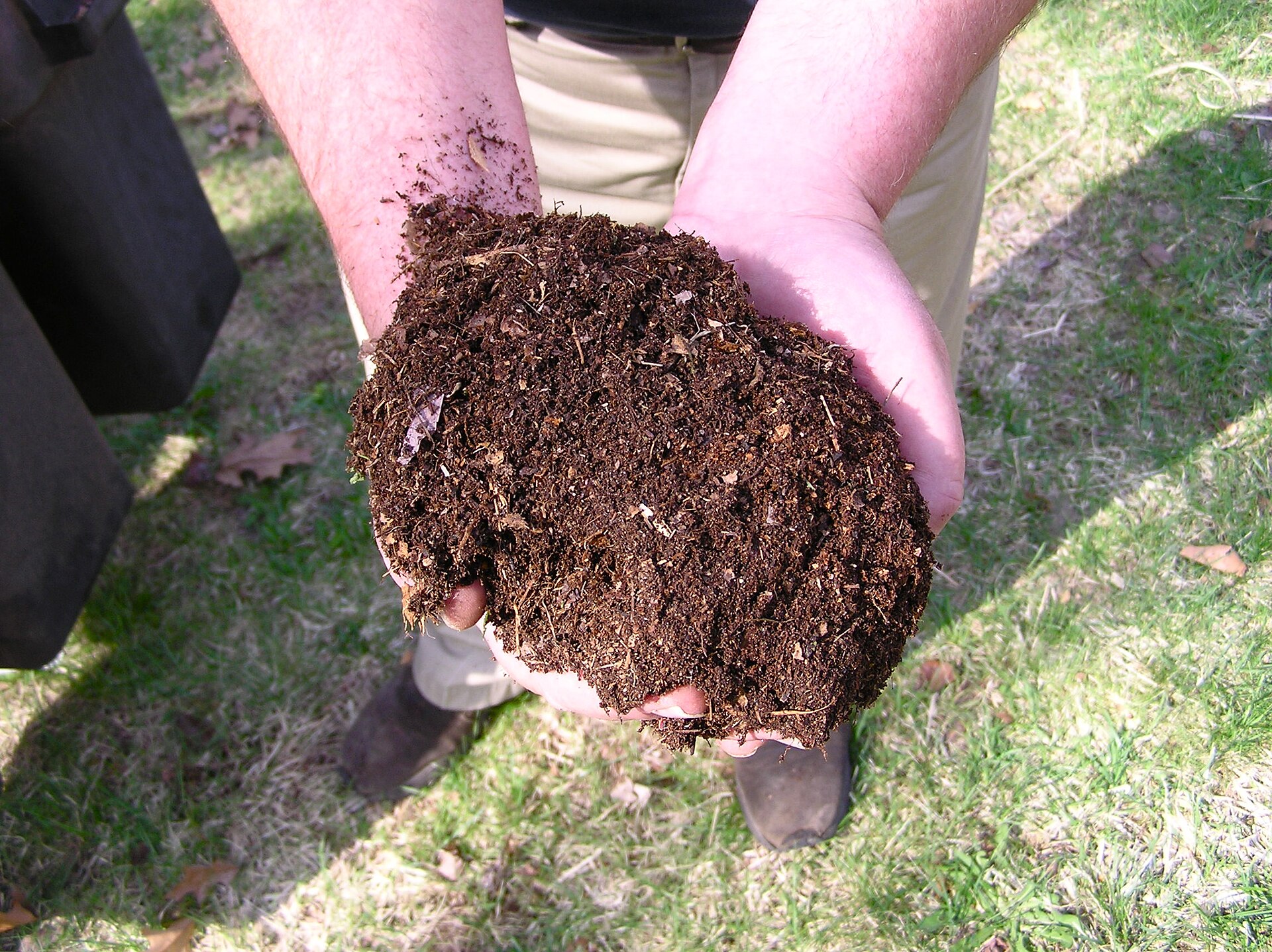
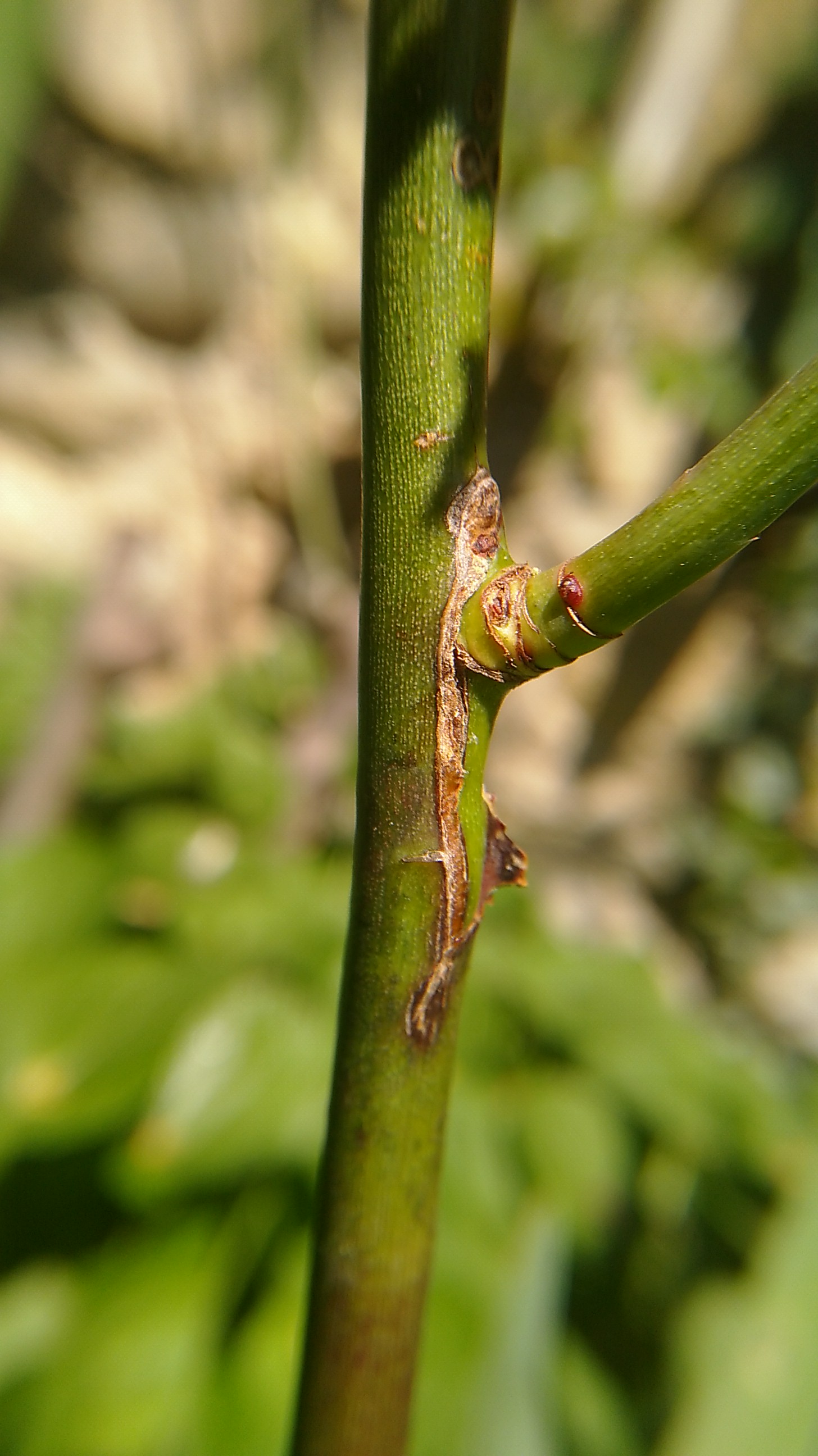
Sharp tools, clean cuts, healthy tree. Dull blades crush instead of cutting and create wounds that resist healing and invite disease.
What you'll need
A handful of items will see you through every recovery phase — from initial assessment to fall grafting
A tree is not in a hurry. Recovery happens on its own clock — your job is to create the conditions and then have the patience to wait.
Your action checklist
Everything from the field manual, distilled into actionable items. Check them off as you go — your progress is tracked and saved in your browser.